
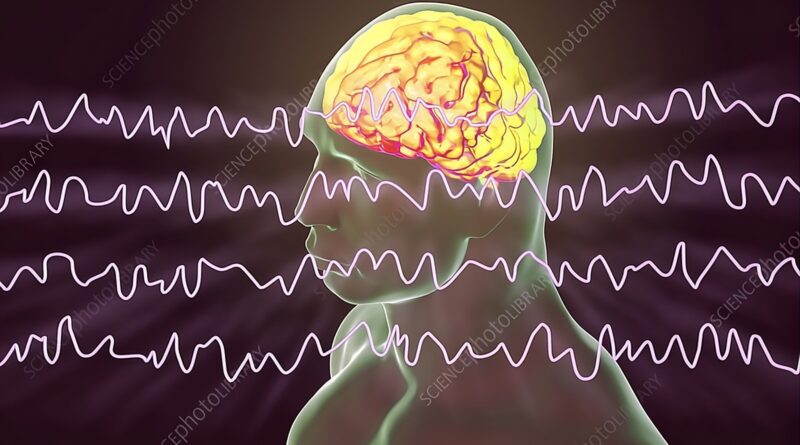
What Happens in the Brain When We Die? The Neuroscience of the Final Moments
The boundary separating life from the end of everything has always been described as a silent shadow line, a point of no return shrouded in mystery and philosophical speculation. For millennia we have sought to imagine what it feels like or what happens when the heart stops beating, relying on the suspended tales of those who went close enough to touch that limit and then return. Stories of near-death experiences are almost all identical, regardless of culture or era, often speaking of warm lights, a deep sense of peace, and above all, the chilling phenomenon of the film of one’s life flashing before their eyes in a fraction of a second.
Until recently, science dismissed these visions as mere hallucinations caused by the progressive lack of oxygen or the desperate attempt of cellular tissues to survive total collapse. However, an exceptional and entirely accidental medical discovery has opened the doors of neuroscience laboratories to a completely new and incredibly fascinating biological understanding of those concluding moments.
It all began in a hospital room where an eighty-seven-year-old man, suffering from a severe form of epilepsy, was connected to a continuous electroencephalography machine. Doctors needed to monitor his seizures in real time to adjust his therapy, constantly recording every single electrical fluctuation of his cerebral cortex. Suddenly, the scenario took a dramatic turn: the patient suffered a sudden cardiac arrest and passed away while the electrodes continued to trace the activity of his mind. What could have seemed like a clinical tragedy transformed, for the first time in medical history, into the objective and uninterrupted recording of a human brain at the exact moment of death.
The team of researchers, led by neurosurgeon Ajmal Zemmar and his colleagues, found themselves with nine hundred seconds of electrical tracings, focusing their attention especially on the crucial time window enclosed in the thirty seconds before and the thirty seconds after the heart stopped. The data emerging from this analysis, subsequently published in the scientific journal Frontiers in Aging Neuroscience, literally shook the global medical community, overturning the widespread idea that the mind turns off like a faulty light bulb as soon as blood flow ceases.
The Unexpected Symphony of Gamma Waves Before the Silence
At the exact moment the heart stopped pumping blood to the organs, the monitors did not record an immediate void, but rather an extraordinary and coordinated increase in a specific type of electrical activity: gamma waves. In normal daily life, these oscillations represent the highest frequency produced by our nervous system and are activated when we are called to perform high-level cognitive tasks, such as solving complex logical problems, deep introspection, guided meditation, and, above all, retrieving the most vivid memories stored in long-term memory.
Seeing such a sharp and structured spike in gamma waves in a clinically dead organism suggested an almost poetic reality to neuroscientists, namely that the brain does not passively endure the end of oxygen, but orchestrates a final, monumental act of conscious processing. This spectacular burst of electrical energy was not limited to a chaotic explosion of impulses, but showed a surprising coordination with other minor brain frequencies, such as alpha, theta, and beta waves, mimicking almost perfectly the neurophysiological pattern that doctors observe when a person is daydreaming or recalling a pivotal event from their past with extreme precision.
The implications of this scientific discovery open up incredible scenarios regarding the perception of the final moments of life. The authors of the research hypothesized that the brain possesses a sort of residual biological program, evolutionarily preserved over millennia, which activates precisely during the terminal transition phase. This phenomenon could explain on purely neurological bases why those who survive cardiac arrest often describe a detailed flashback of their existence.
In the moments when the external world fades and the senses shut down one by one, the mind retreats inward, playing a hyper-realistic sequence of the happiest or most meaningful moments lived by the individual, almost as if it wanted to reconcile the entire earthly experience before the great darkness. This huge spike in high-frequency waves demonstrates that consciousness, or something very similar to it, could continue to float in a hyper-cognitive state even when traditional vital parameters indicate that life has formally ended.
The Biological Redefinition of the Line Between Life and Death
This pioneering study forces medical science to deeply reconsider the bureaucratic and clinical boundaries we use to declare the death of a human being. Traditionally, forensic medicine and hospital practice consider a flat electrocardiogram to be the unequivocal sign of the end of everything, assuming that the interruption of blood circulation causes the immediate cessation of all brain functions.
The collected data, however, demonstrate that the brain possesses a surprising resilience and that coordinated activity between the hemispheres can persist for several seconds, if not minutes, after the heart has stopped beating. This discovery raises delicate and complex questions that go far beyond pure scientific curiosity, touching on bioethics and the very management of medical protocols in intensive care units. If the mind continues to process information, to dream, or to remember even after cardiac arrest, it becomes essential to understand how long this window of potential consciousness remains active and what external stimuli, such as the voices of family members or physical contact, can still be received by the patient in that invisible limbo.
Beyond the purely clinical questions relating to the timing of organ retrieval in donors, the discovery offers a perspective of enormous psychological comfort for those facing grief and the loss of a loved one. Knowing that in the moments when the eyes close and the body surrenders to final rest, the mind is not suffering, but is probably traveling through the sweetest and brightest memories of its history, radically changes the way we look at the experience of dying.
Neuroscience is telling us that nature seems to have provided an intimate and protective mechanism to soothe the departure, transforming the final moments into an inner journey of extraordinary emotional intensity. The road to completely deciphering the secrets of the human mind is still incredibly long and complex, and as this is the detailed study of a single clinical case, many more confirmations will be needed; yet, this first, incredible tear of light in the darkness of death suggests to us that the last chapter of our lives might not be a silent void, but the most vivid dream we have ever had.
How the Brain Constructs Reality — The Astonishing Science Behind Conscious Perception
A cosmic‑themed exploration of how the brain builds the world we think we see, revealing the hidden architecture of perception and the neural patterns that shape conscious experience. Read More
The Mind That Shapes Reality: How the Brain Builds the World We Think We See
A deep narrative journey into the neuroscience of consciousness, showing how the mind generates reality the moment awareness returns, blending memory, prediction and sensory input. Read More
What Happens in the Brain When We Sleep — The Real Reason Dreams Feel So Real
An immersive look at REM sleep, where the same neural circuits used to process waking reality ignite vivid dream experiences, offering clues to the brain’s behavior in liminal states. Read More
