
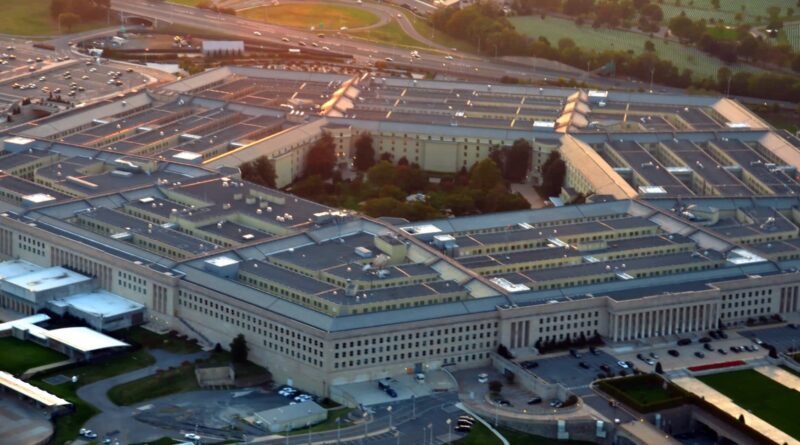
Pentagon Lockdown False Alarm: Inside the Rapid Response That Shook the World’s Most Secure Building
Pentagon lockdown false alarm — the phrase spread across Washington in seconds, turning an ordinary afternoon into a moment of global attention. Inside the world’s most fortified military headquarters, alarms echoed through the corridors as automated sensors detected what appeared to be hazardous airborne materials. Within moments, the Pentagon shifted from routine operations to full emergency mode, triggering a lockdown that rippled through every ring of the building.
The incident began when air‑quality monitors flagged an anomaly in one of the administrative sectors. These systems are designed to detect even the slightest irregularity, and when they do, the response is immediate. Doors sealed automatically, personnel were instructed to shelter in place, and emergency teams mobilized with precision. For those inside, the sudden shift from calm to crisis was a stark reminder of how fragile security can feel, even in a place built to withstand the unimaginable.
Outside, the scene transformed just as quickly. Military police expanded the perimeter, fire units arrived with lights cutting through the afternoon haze, and hazmat specialists prepared to enter the building. Traffic slowed around the Pentagon as drivers realized something unusual was unfolding. In Washington, a city accustomed to tension, the words Pentagon lockdown false alarm carried weight long before the “false alarm” part was confirmed.
Inside the building, communication systems kept personnel updated as emergency teams moved through the affected area. Hazmat specialists conducted a meticulous sweep, analyzing air samples and checking for any sign of contamination. Every step was deliberate, every movement calculated. In a facility where national security decisions are made every hour, even a minor anomaly becomes a matter of global importance.
As the investigation continued, federal agencies were notified, and the national security network activated its standard protocols. The Pentagon’s leadership monitored the situation closely, aware that any delay or misinterpretation could have consequences far beyond the building’s walls. For a brief moment, uncertainty hung in the air — a reminder that even the most advanced systems can trigger alarms that demand immediate action.
Then, after a thorough inspection, the tension finally broke. Specialists confirmed that the alert had been caused by a false reading, not by any hazardous substance. No chemical agents were detected, no personnel were harmed, and no contamination was found. The Pentagon lifted the lockdown, issued an all‑clear, and allowed operations to resume. The phrase Pentagon lockdown false alarm now carried a different tone — one of relief rather than fear.
Officials emphasized that the response unfolded exactly as intended. In high‑security environments, systems are designed to prioritize caution over convenience. A false alarm, they noted, is far better than a missed threat. Still, the event served as a real‑world test of readiness, demonstrating how quickly the Pentagon can mobilize when confronted with uncertainty.
In the hours that followed, analysts reviewed the sensor data to determine what triggered the anomaly. Early indications pointed to a technical glitch, possibly caused by environmental fluctuations or equipment sensitivity. While such incidents are rare, they highlight the importance of constant monitoring and maintenance in facilities where even a minor malfunction can spark a major response.
As evening settled over Washington, the Pentagon returned to its usual rhythm. Officers resumed briefings, analysts returned to their screens, and the building’s five rings pulsed with their familiar energy. Yet the memory of the Pentagon lockdown false alarm lingered — a quiet reminder that vigilance is not just a protocol but a necessity in a world where threats evolve faster than ever.
And in the end, the incident became more than a false alarm. It became a moment of reflection, a demonstration of preparedness, and a reminder that even the strongest institutions must remain alert, responsive, and ready for anything.
A brief echo of enduring vigilance.