
Area 51: The Truth Behind America’s Most Mysterious Military Base
Area 51 is one of those places that needs no introduction. Just saying its name evokes images of hidden spacecraft, underground laboratories, alien engineering and military secrets the U.S. government never intended to reveal. But behind the legend, behind decades of speculation and theories, there is a real story made of advanced technology, classified military programs and a level of secrecy that has fueled the global imagination like few other places on Earth.
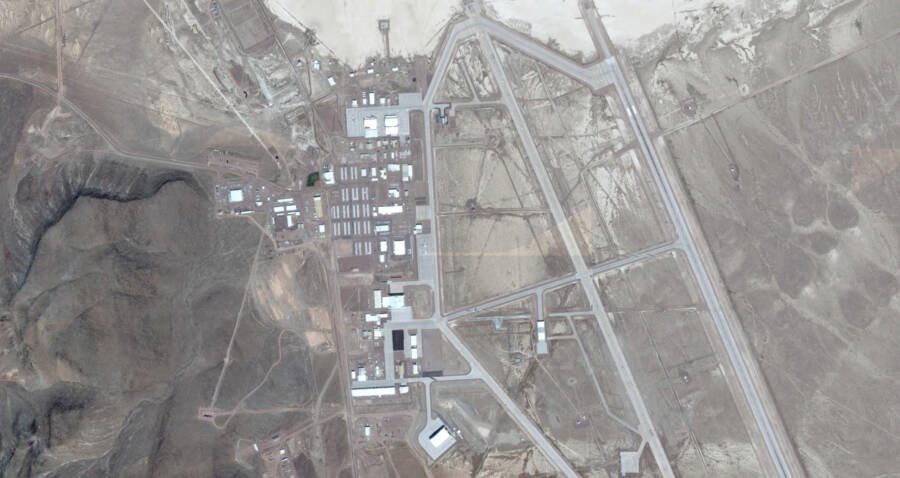
The base lies in the Nevada desert, inside the vast military complex known as the Nevada Test and Training Range, one of the most heavily controlled areas in the United States. For decades, Area 51 did not appear on any official map. The government denied its existence until 2013, when the CIA finally declassified documents confirming what millions of people had suspected for years: the base was real, operational and essential for the development of advanced military technologies.
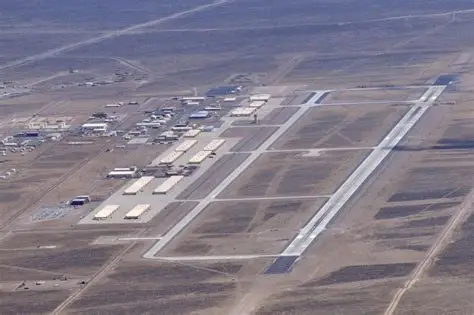
The story of Area 51 does not begin with aliens, but with airplanes. In the 1950s, during the Cold War, the United States needed a remote location to test secret aircraft, far from prying eyes and potential Soviet spies. This is where the U‑2 program was born, the famous spy plane capable of flying above 21,000 meters. The project was so classified that even the pilots could not talk about their missions. When civilians saw a U‑2 crossing the sky at altitudes never seen before, many believed they had witnessed a UFO. The CIA later admitted in declassified documents that more than half of UFO sightings in the 1950s and 1960s were actually tests of secret aircraft.
But Area 51 did not stop with the U‑2. In the following years, the base became the heart of even more ambitious programs. Here the A‑12 Oxcart was developed, a spy plane capable of reaching Mach 3.2, followed by the legendary SR‑71 Blackbird, one of the fastest aircraft ever built. In the 1980s, Area 51 was involved in the F‑117 Nighthawk program, the world’s first operational stealth aircraft. All these projects required absolute secrecy, and the base was the ideal place to carry them out.
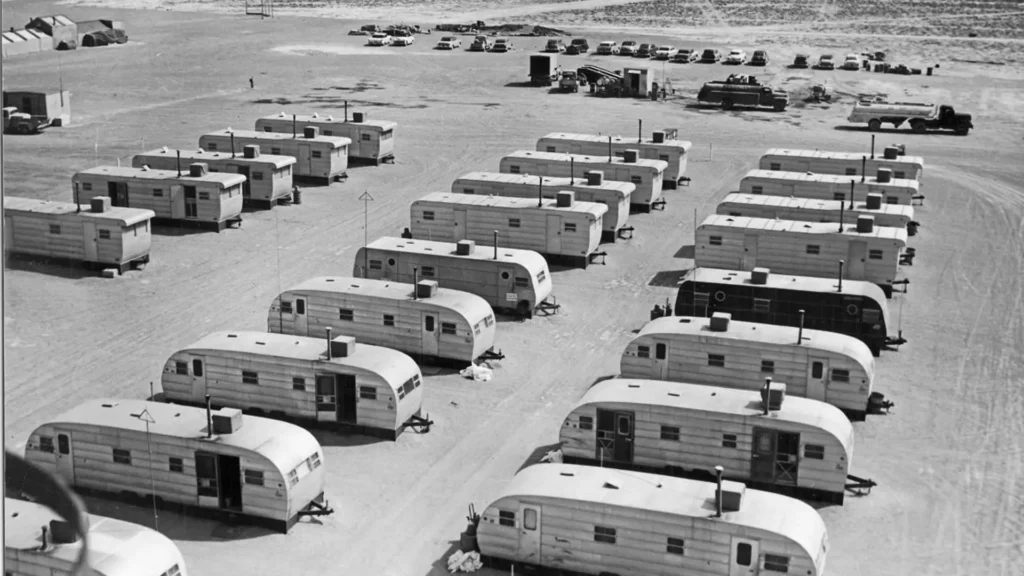
Secrecy, however, comes at a price. When a place is so hidden, so protected, so denied, it inevitably becomes fertile ground for speculation. This is where pop culture, science fiction and human curiosity come into play. The Roswell incident of 1947 fueled decades of belief that the United States had recovered an alien spacecraft. Although historians agree it was a spy balloon from Project Mogul, the popular narrative took a different path. Many began to believe that the remains of the object had been taken directly to Area 51.
The legend exploded in the 1980s when Bob Lazar, a man who claimed to have worked in a facility called S‑4 near Area 51, said he had seen alien technology and participated in the study of propulsion systems based on “gravity manipulation.” His claims have never been confirmed, and many parts of his story have been contested. But Lazar helped create a myth that still dominates American UFO culture today.
In the 2000s and 2010s, Area 51 returned to the spotlight thanks to new revelations. In 2017, The New York Times published an investigation into a secret Pentagon program called AATIP, the Advanced Aerospace Threat Identification Program, dedicated to studying unidentified aerial phenomena. Shortly after, former Department of Defense official Luis Elizondo released three videos showing U.S. Navy jets chasing objects that appeared to move in ways impossible for any known aircraft. These videos were later confirmed as authentic by the Pentagon.
From that moment on, the debate around UFOs — now officially called UAP, Unidentified Aerial Phenomena — became more serious. The U.S. government created AARO, the All‑domain Anomaly Resolution Office, which publishes official reports and technical analyses. In 2024 and 2025, AARO released documents confirming the existence of unexplained phenomena, while denying any evidence of extraterrestrial technology. In 2026, the topic became even more central with the release of more than 160 declassified documents, expanding the discussion around UAPs and their potential implications.
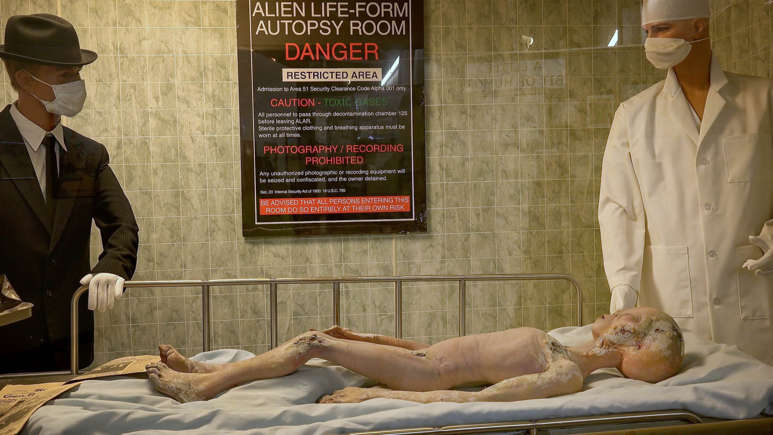
So what do we really know about Area 51? We know it is an active military base dedicated to the development and testing of advanced technologies. We know it was essential in creating aircraft that changed the history of aviation. We know its secrecy has fueled decades of theories, some plausible, others completely fantastical. And we know the U.S. government continues to protect what happens there with a level of confidentiality unmatched anywhere else.
But we also know that the truth is often more complex than fiction. Area 51 is not necessarily the place where aliens are kept. It is the place where the United States built the future of aerospace technology. And perhaps for this very reason, it will remain forever wrapped in mystery.
At the edge of every military secret lies a deeper question about how power evolves. If the hidden history of Area 51 has sparked your curiosity about the future of warfare, you may want to explore how modern armies are transforming themselves in ways that were once unimaginable. Continue your journey inside Defense & Military with The Age of Adaptive Warfare, a story about a battlefield where machines learn faster than humans can think.