
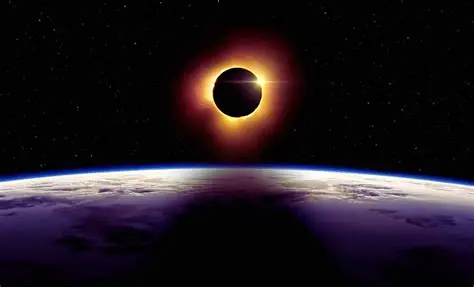
Total Solar Eclipse August 12 2026: A Rare Celestial Alignment Set to Transform Skies Across Europe and Beyond
On August 12, 2026, the Sun, the Moon, and the Earth will align in one of the most anticipated astronomical events of the decade: the total solar eclipse August 12 2026. For a brief and extraordinary moment, daylight will collapse into twilight along a narrow corridor stretching from the Arctic to the Iberian Peninsula, while vast regions across Europe, western Asia, North Africa, and even parts of North America will witness a dramatic partial eclipse. This event is not merely a scientific curiosity; it is a global moment of collective wonder, a rare alignment that will draw millions of eyes toward the sky.
Solar eclipses have fascinated humanity for thousands of years. They are reminders of the delicate geometry of our Solar System, of the cosmic choreography that governs celestial motion. The total solar eclipse August 12 2026 will be one of those rare moments when the universe reveals its precision, offering a spectacle that blends science, culture, and raw visual beauty.
A Shadow Crossing the Edge of the World
The path of totality—the narrow region where the Sun will be completely obscured—will begin in the far northern territories of Russia. In these remote landscapes, the Moon’s umbra will touch Earth and plunge the region into a brief but complete darkness. From there, the shadow will race across the Arctic Ocean, sweeping over Greenland’s icy expanse before descending toward Iceland. For Icelandic observers, the eclipse will be a once‑in‑a‑lifetime event: the Sun will vanish behind the Moon for roughly two and a half minutes, revealing the solar corona, the ghostly halo of plasma that surrounds our star.
After leaving Iceland, the shadow will cross the Atlantic and make landfall over northern Spain. Regions such as Galicia, Asturias, and parts of Castile and León will experience the European climax of the eclipse. The Sun will be completely obscured, temperatures will drop slightly, and the landscape will be bathed in an eerie twilight. Even animals may react to the sudden darkness, as birds quiet down and nocturnal species briefly stir. A small portion of northern Portugal will also witness totality before the shadow continues westward into the ocean and fades into the evening sky.
Totality is rare not because eclipses are infrequent, but because the Moon’s shadow is so narrow—only a few tens of kilometers wide—that it touches only a tiny fraction of Earth’s surface each time. To stand within that shadow is to witness the universe revealing one of its most intimate secrets.
A Pan‑Continental Partial Eclipse
While totality will be confined to a narrow corridor, the partial eclipse will be visible across a vast portion of the Northern Hemisphere. Much of Europe will experience a deep partial eclipse, with the Moon covering a significant portion of the Sun’s disk. Western Asia, including regions of Turkey and the Caucasus, will also witness the event. North Africa will see the Sun partially obscured, creating a noticeable dimming of the sky. Even parts of eastern Canada and the northeastern United States will catch the early stages of the eclipse as the Sun rises.
In Europe, the partial eclipse will be especially dramatic. Countries such as France, Germany, the United Kingdom, the Netherlands, Belgium, Switzerland, Austria, and Poland will see the Sun transformed into a crescent. Southern Europe—including Greece, Croatia, and the Balkans—will also experience a clear partial eclipse. Italy, too, will be among the regions touched by the phenomenon, with northern areas witnessing a particularly deep coverage. But Italy remains simply one of many European regions involved, part of a continental tapestry of observation stretching from the Arctic Circle to the Mediterranean.
The timing of the eclipse will vary depending on location. In western Europe, the event will unfold during the late afternoon and early evening, creating a surreal blend of eclipse and sunset. In northern Europe, the Sun will be higher in the sky, offering clearer visibility. In North Africa and western Asia, the eclipse will occur earlier in the day, under brighter skies.
The Science Behind the Total Solar Eclipse August 12 2026
Solar eclipses occur because the Moon, despite being much smaller than the Sun, is close enough to Earth to appear nearly the same size in the sky. When the Moon passes directly between Earth and the Sun, it casts a shadow that briefly plunges parts of the planet into darkness. The geometry must be perfect: the Moon’s orbit must align precisely with the Earth‑Sun line, something that happens only a few times each year. But most eclipses are partial or occur over remote regions. Total eclipses visible from populated areas are rare treasures.
During totality, observers can see the solar corona, a structure of hot plasma extending millions of kilometers into space. The corona is usually invisible because the Sun’s brightness overwhelms it, but when the Moon blocks the Sun’s disk, the corona emerges like a ghostly crown. Scientists use eclipses to study the corona’s shape, temperature, and magnetic fields, gaining insights into solar storms and the behavior of the Sun’s outer atmosphere.
Even partial eclipses offer scientific value. They allow researchers to measure how sunlight changes during the event, how animals respond to the dimming, and how atmospheric temperatures fluctuate. For everyday observers, however, the eclipse is primarily an emotional experience—a moment when the familiar rules of daylight are suspended.
How to Watch the Eclipse Safely
Despite the beauty of the event, observing the Sun is dangerous without proper protection. The human eye cannot tolerate direct sunlight, even when the Sun is partially covered by the Moon. Ordinary sunglasses are useless; they do not block the intense ultraviolet and infrared radiation that can permanently damage the retina.
To watch the total solar eclipse August 12 2026 safely, observers must use certified solar eclipse glasses that meet international safety standards. These glasses contain special filters that reduce sunlight to safe levels. Telescopes, binoculars, and cameras must also be equipped with solar filters designed specifically for eclipse viewing. Without these protections, even a brief glance at the Sun can cause serious harm.
The only moment when the Sun can be viewed with the naked eye is during totality, when the Moon completely covers the solar disk. But only observers within the narrow path of totality—Russia, Greenland, Iceland, northern Spain, and northern Portugal—will experience that phase. Everywhere else, protective equipment is mandatory.
A Global Moment of Wonder
The total solar eclipse August 12 2026 will be more than a scientific event. It will be a shared experience across continents, a moment when millions of people look toward the same horizon. In Spain and Portugal, towns along the path of totality are already preparing for an influx of visitors. Iceland expects thousands of travelers seeking the dramatic Arctic darkness. Across Europe, astronomy clubs, observatories, and local communities will organize viewing events along beaches, hilltops, and public squares.
Eclipses have always carried cultural significance. Ancient civilizations saw them as omens, messages from the gods, or signs of cosmic imbalance. Today, we understand the physics behind them, but the emotional impact remains. There is something deeply human about watching the Sun disappear, even partially. It reminds us of our place in the universe, of the delicate balance that governs celestial motion, and of the beauty that emerges when shadows fall across the Earth.
For readers interested in another major astronomical event involving near‑Earth objects, Zemeghub offers an in‑depth analysis of NASA’s long‑term monitoring of asteroid Bennu: Asteroid Bennu: Why NASA Warns About a Possible Impact in 2182.
