
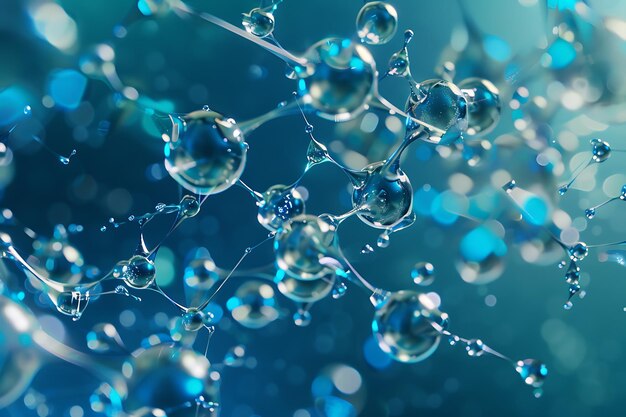
Water and Life: 7 Profound Insights Into the Element That Shapes the Universe
Water and Life: The Silent Architecture of Existence
Water and life have always been intertwined, moving together through the deep history of the universe like two inseparable forces shaping matter, memory, and consciousness. If you could step inside a single drop of water, you would discover a world in motion, a restless choreography of molecules that has guided life since its very beginning.
If you could step inside a single drop of water, the world you’d find there would feel nothing like the liquid we see shimmering on the surface of a lake. It would be a landscape in motion — a restless choreography of molecules colliding, separating, reuniting, forming fleeting structures that appear and vanish in the span of a heartbeat. And yet, within this apparent chaos lies a hidden order, a quiet architecture that has shaped life since the beginning of time.
Water is not simply a substance. It is a stage, a medium, a force. It is the first environment life ever knew, and the one it never truly left. Even now, billions of years after the first oceans formed, every living cell carries within it a memory of that primordial sea. We are, in a very real sense, walking oceans.
When scientists look at water, they often describe it in terms of chemistry: two hydrogen atoms, one oxygen atom, a polar molecule capable of forming hydrogen bonds. But this description, while accurate, is incomplete. It captures the skeleton of water, not its soul. Because water is not defined by its atoms, but by the way those atoms move, connect, and respond to everything around them.
In the microscopic world, water behaves like a living network. Its molecules link and unlink in patterns that shift with temperature, pressure, and the presence of other substances. These patterns are not random. They create micro‑environments, pockets of order within the liquid, tiny architectures that influence how molecules behave. Proteins fold differently depending on the water that surrounds them. DNA unwinds and rewinds in rhythms shaped by the liquid cradle that holds it. Every reaction essential to life — every spark of metabolism, every whisper of genetic expression — unfolds within this dynamic, ever‑changing matrix.
It is as if water were not merely hosting life, but guiding it.
Imagine the early Earth: a world of volcanic heat, violent storms, and oceans stretching endlessly beneath a sky still forming. In that vast, turbulent water, the first organic molecules drifted and collided. They did not yet know what they would become. They had no purpose, no direction. But the water around them did something extraordinary: it created the conditions in which complexity could emerge. It stabilized some structures, destabilized others, nudged molecules into patterns that would eventually give rise to the first primitive cells.
Water was the first architect of life.
Even today, inside every organism, water continues this ancient work. It shapes the behavior of proteins, orchestrates the movement of ions, mediates the signals that allow cells to communicate. It is the silent partner in every biological process, the invisible hand that keeps the machinery of life running smoothly.
And yet, for all its importance, water remains one of the great mysteries of science. It defies expectations. It breaks rules. It behaves in ways no other substance does. It expands when it freezes. It dissolves more materials than any other liquid. It can absorb vast amounts of heat without changing temperature. It forms structures that last just long enough to matter, then dissolve back into the flow.
It is a substance that seems simple, but hides a complexity that borders on the miraculous.
To understand life, we must understand water. Not as a chemical formula, but as a force — a dynamic, shape‑shifting presence that has accompanied life from its first breath to this very moment. Water is not just part of our story. It is the story.
And this story is only beginning.
Water and Life: The Hidden Language of Existence
If you could shrink yourself down to the scale of molecules and drift through the interior of a living cell, you would discover a world that feels nothing like the diagrams in textbooks. It would not be a tidy landscape of neatly drawn proteins and DNA strands. It would be a storm — a shimmering, vibrating ocean of water molecules in perpetual motion, colliding and separating in patterns too fast for the human eye to follow. And yet, within this restless sea, something extraordinary happens: order emerges. Not the rigid order of a crystal, but a living, breathing choreography that allows life to exist.
Water is not a passive backdrop to biology. It is the medium through which life speaks.
Every protein, every strand of DNA, every membrane, every ion depends on the way water moves around it. The molecules of water do not simply surround biological structures; they interpret them. They read their shapes, their charges, their vibrations, and respond by forming fleeting architectures — tiny, temporary patterns that last only trillionths of a second, yet long enough to influence everything that happens next. It is as if water were constantly whispering instructions to the molecules of life, guiding them toward the forms and functions they must assume.
Inside this microscopic world, water behaves like a language. Not a language made of words, but of patterns — patterns of attraction and repulsion, of alignment and disruption, of coherence and chaos. When a protein folds into its functional shape, it does so because water pushes and pulls on its surface, encouraging some parts to hide and others to emerge. When DNA unwinds to be read, water stabilizes the exposed bases just long enough for the cell to copy or repair them. When ions rush across a membrane to create an electrical signal, they do so through channels sculpted by water’s invisible hand.
Water is the translator between chemistry and life.
Scientists once believed that water was too chaotic to hold any structure at all. They imagined it as a random swarm of molecules, constantly breaking and reforming bonds in a frenzy too fast to matter. But as our instruments grew more sensitive, the picture changed. Researchers began to see that water can form micro‑domains — tiny pockets of order that persist just long enough to influence biological reactions. These structures are not memories in the human sense, but they are echoes, traces, patterns that linger for a moment before dissolving back into the flow.
It is in these fleeting patterns that life finds its rhythm.
Imagine a protein entering a cell. Before it interacts with anything else, it encounters water — water that has already been shaped by the molecules that passed through moments before. The protein does not enter a neutral environment; it enters a landscape already sculpted by history. The water around it carries the imprint of what has just happened, and that imprint subtly guides the protein’s path. It is a choreography so delicate, so ephemeral, that it borders on the miraculous.
This is why some scientists speak of water not as a solvent, but as a medium of information. Not information encoded in symbols, but in structure — in the way molecules align, in the way they vibrate, in the way they respond to the presence of life. Water is the first listener of biology, the first interpreter, the first participant in every reaction that unfolds within a cell.
And yet, for all its importance, water remains elusive. It refuses to be pinned down, refuses to behave like other substances, refuses to reveal all its secrets. It is a liquid that defies expectations, a substance that seems simple but hides a complexity that challenges our understanding of matter itself.
To study water is to study the boundary between order and chaos, between physics and biology, between the known and the unknown. It is to stand at the edge of a mystery that has shaped life since the beginning of time.
And this mystery deepens as we move forward. Because if water is a language, then what does it say about the origins of life? What role did it play in the moment when chemistry first crossed the threshold into biology? What patterns did it create in the ancient oceans that allowed the first living systems to emerge?
These questions lead us to the next chapter — a journey into the earliest moments of life on Earth, when water was not just a participant, but the cradle in which everything began.
Water and Life: The Origin of Existence
If you could travel back to the earliest days of our planet, long before continents formed or skies turned blue, you would find a world unrecognizable to us. The Earth was young then — a restless sphere of fire and stone wrapped in a haze of volcanic gases. And yet, even in that chaos, something essential was already taking shape. Water was gathering. Steam condensed into rain, rain fell in torrents for millions of years, and oceans spread across the surface like vast, shimmering basins waiting for a story to begin.
Those first oceans were nothing like the tranquil waters we know today. They were hot, mineral‑rich, electrified by storms that tore across the sky. Lightning cracked open the darkness, illuminating waves that churned with chemical potential. It was in this turbulent water — not in calm pools, not in quiet lakes — that the earliest whispers of life began to form.
Scientists often call this environment the “primordial soup,” but the phrase feels too simple, too domestic, for what truly unfolded. The early oceans were not a bowl of ingredients waiting to be stirred. They were a dynamic, living laboratory, a place where water itself shaped the possibilities of chemistry. Molecules drifted, collided, broke apart, and reassembled in endless combinations. Most of these combinations vanished as quickly as they appeared. But some lingered. Some found stability. Some discovered, by chance, the first fragile steps toward complexity.
Water was not a passive container for these reactions. It was an active force — a sculptor, a filter, a silent architect. Its polarity allowed certain molecules to dissolve and interact. Its structure created micro‑environments where reactions could occur more easily. Its constant motion brought molecules together in ways that would have been impossible in air or on solid ground. Water was the first environment that allowed chemistry to become dynamic, to explore possibilities, to evolve.
Imagine a simple organic molecule drifting through that ancient sea. Alone, it is nothing — a fragment, a shape without purpose. But in water, it moves. It encounters other fragments. It binds to some, repels others, forms chains, breaks apart, reforms. Water gives it motion, and motion gives it opportunity. Over time, these opportunities accumulate. Patterns emerge. Structures stabilize. And eventually, something astonishing happens: molecules begin to organize themselves.
One of the most remarkable steps in this journey was the formation of protocells — tiny spheres made of simple lipids that spontaneously assembled in water. These spheres were not alive, not yet, but they created an inside and an outside. They formed boundaries. They concentrated molecules. They allowed reactions to occur in protected spaces. In these microscopic bubbles, chemistry began to take on the first faint outlines of biology.
Water made these protocells possible. It pushed hydrophobic molecules together, forcing them to form membranes. It stabilized the fragile structures long enough for new reactions to occur inside them. It created the conditions in which the first primitive systems could begin to replicate, to store information, to evolve.
Even the molecules we now consider essential to life — DNA, RNA, proteins — owe their existence to water. DNA’s double helix is stabilized by the way water interacts with its bases. Proteins fold into their functional shapes because water pushes their hydrophobic regions inward and pulls their hydrophilic regions outward. Without water, these molecules would collapse into chaos. With water, they become the machinery of life.
It is tempting to imagine that life began because of some rare stroke of luck, some improbable event that happened only once in the history of the universe. But when you look closely at water — at its structure, its behavior, its uncanny ability to guide molecules toward complexity — another possibility emerges. Perhaps life was not an accident. Perhaps it was a natural consequence of water’s properties, a destiny written into the physics of the universe itself.
In this view, water is not just the cradle of life. It is the midwife. The catalyst. The quiet force that nudged matter across the threshold from chemistry to biology.
And if water played such a profound role in the origin of life, what does that mean for the story that follows? What does it mean for consciousness, for identity, for the way we perceive the world? What does it mean for our place in the cosmos?
These questions lead us forward — into the next chapter, where water becomes not just the architect of life, but a participant in the emergence of mind itself.
Water and the Emergence of Life
If you could descend into the ancient oceans of the early Earth, you would enter a world suspended between chaos and possibility. The water would be warm, dense with minerals, stirred by volcanic vents that exhaled heat from the planet’s molten heart. Darkness would surround you, broken only by the faint glow of chemical reactions flickering like underwater lightning. It was here, in this restless, churning sea, that life first began to imagine itself.
The story of life’s emergence is not a tale of sudden miracles. It is a slow, patient unfolding — a dance of molecules guided by the subtle, persistent hand of water. In this primordial ocean, simple compounds drifted and collided, forming chains that grew, broke apart, and reformed. Most of these chains vanished as quickly as they appeared. But some endured. Some found stability in the liquid around them. Some discovered the first fragile hints of self‑organization.
Water was the stage on which this drama unfolded, but it was also the director. Its polarity allowed certain molecules to dissolve and interact. Its structure created micro‑environments where reactions could take place more easily. Its constant motion brought molecules together in ways that would have been impossible in any other medium. Water did not simply host the chemistry of life — it shaped it.
One of the most extraordinary steps in this journey was the emergence of molecules capable of storing information. RNA, with its delicate strands and intricate folds, may have been among the first. It could copy itself, not perfectly, but well enough to allow variation. And variation meant evolution. In the warm, mineral‑rich waters of the early Earth, these strands drifted like tiny scripts waiting to be read, waiting to be rewritten.
But even RNA needed a home. It needed a boundary, a space where reactions could occur without being washed away by the tides of the ocean. And so, water performed another miracle. It coaxed simple lipids into forming membranes — thin, fragile bubbles that enclosed pockets of chemistry. These protocells were not alive, not yet, but they created an inside and an outside. They created the first hint of individuality.
Inside these microscopic spheres, reactions became more efficient. Molecules concentrated. Patterns stabilized. And slowly, almost imperceptibly, the first primitive systems began to replicate, to adapt, to evolve. Life did not begin with a spark. It began with a flow — a flow shaped, sustained, and guided by water.
Even today, billions of years later, every living cell carries the memory of this origin. The cytoplasm is a miniature ocean, a liquid world where molecules drift and collide just as they did in the primordial sea. The membranes that surround our cells are descendants of those first lipid bubbles. The RNA that helps build our proteins is a distant echo of the strands that once floated freely in the ancient waters.
Water has never stopped shaping life. It orchestrates the folding of proteins, stabilizes the structure of DNA, and mediates the signals that allow cells to communicate. It is the silent partner in every biological process, the invisible thread that connects the first protocells to the complexity of modern organisms.
To understand the emergence of life is to understand water — not as a simple liquid, but as a force that blurs the line between chemistry and biology. Water is the medium in which matter learns to organize itself, to remember, to adapt, to evolve. It is the quiet architect of life’s beginnings.
And yet, the story does not end here. Because once life emerged, once molecules learned to replicate and evolve, something even more extraordinary began to take shape. In the depths of this liquid world, in the interplay of ions and membranes, the first faint whispers of consciousness began to stir.
Water and the Birth of Consciousness
If you could journey inside the human brain, not as a surgeon or a scientist, but as a traveler drifting through its hidden landscapes, you would find a world that feels strangely familiar. It is not a world of wires and circuits, as we often imagine, but a world of currents — shimmering rivers of ions, waves of electrical activity, tides of chemical signals rising and falling in perfect synchrony. And beneath it all, surrounding every neuron, filling every synapse, shaping every thought, there is water.
The brain is often described as an electrical organ, a network of cells firing in rapid succession. But electricity alone cannot explain consciousness. The spark of a thought, the weight of a memory, the warmth of an emotion — these are not the products of wires. They are the products of a fluid world, a world in which water is not merely present, but essential.
Nearly eighty percent of the brain is water. Not stagnant water, not passive water, but water in motion — water that flows through microscopic channels, water that cushions delicate structures, water that carries ions with the precision of a conductor guiding an orchestra. Every signal that travels through the nervous system depends on the way water allows charged particles to move. Every synapse depends on the way water shapes the space between neurons. Every pattern of brain activity — from the quiet hum of rest to the storm of inspiration — is sculpted by the liquid environment in which it unfolds.
It is tempting to imagine consciousness as something separate from the body, something ethereal, intangible. But when you look closely, when you descend into the microscopic world where thoughts are born, you discover that consciousness is not an abstraction. It is a physical process, a dance of molecules, a symphony of flows. And water is the medium that makes this dance possible.
Imagine a single neuron preparing to fire. Before it sends its signal, ions must gather on one side of its membrane, creating a delicate imbalance. This imbalance is not a static arrangement; it is a dynamic tension held in place by water. The moment the neuron fires, water rushes to stabilize the sudden change, guiding ions through channels that open and close with astonishing precision. The signal travels down the axon like a wave, propelled by the movement of water molecules that carry charge from one point to the next.
And then, at the synapse, something even more extraordinary happens. The electrical signal becomes chemical. Neurotransmitters drift across the synaptic cleft — a space so small it seems impossible that anything meaningful could occur there. But this space is filled with water, and the water is not neutral. It shapes the movement of molecules, slows some, accelerates others, creates micro‑currents that guide the message from one neuron to the next. Consciousness emerges not from the firing of neurons alone, but from the fluid choreography that surrounds them.
Some researchers have begun to explore the idea that water may play a deeper role in consciousness than we once imagined. They suggest that the structure of water around proteins and membranes may influence how signals propagate, how networks synchronize, how patterns of activity become stable enough to form thoughts. These ideas are still young, still speculative, but they point toward a profound possibility: that consciousness is not simply electrical, not simply chemical, but hydrodynamic.
In this view, the mind is not a machine. It is a river.
A river that remembers. A river that adapts. A river that flows through the architecture of the brain, shaping and reshaping itself with every experience.
When you feel joy, the water in your brain shifts. When you feel fear, it shifts again. When you learn something new, when you recall a memory, when you dream, the liquid world inside you rearranges itself in patterns as delicate and complex as the currents of the ocean.
Water is the medium through which the self becomes possible.
It connects the physical to the intangible, the biological to the experiential. It allows matter to feel, to remember, to imagine. Without water, the brain would be a silent structure — a cathedral without music. With water, it becomes a living symphony.
And if consciousness emerges from this liquid world, what does that mean for the self? What does it mean for identity, for memory, for the sense of being alive? These questions lead us into the next chapter, where water becomes not just the medium of consciousness, but the mirror in which the self begins to see itself.
Water and the Inner Self
If you close your eyes and listen to your own body, you might imagine silence. But beneath the stillness, beneath the skin, beneath the pulse you feel in your fingertips, there is movement — a vast, internal ocean in perpetual motion. Every heartbeat sends waves through this ocean. Every breath stirs its surface. Every emotion reshapes its currents. We often think of the self as something solid, something fixed, something defined by memory or personality. But the truth is far more fluid. The self is a tide.
Nearly every part of the human body is shaped by water. It fills our cells, cushions our organs, carries nutrients, removes waste, and maintains the delicate balance that keeps us alive. But beyond these biological roles, water performs another, more mysterious function. It creates the conditions in which the inner world — the world of feelings, intuitions, desires — can exist.
Inside the brain, water mediates the signals that give rise to thought. Inside the heart, it carries the ions that shape each beat. Inside the bloodstream, it transports hormones that influence mood, perception, and behavior. Every shift in emotion — a sudden rush of joy, a tightening of fear, a quiet wave of sadness — is mirrored by a shift in the body’s internal waters. The self is not separate from these movements. It is shaped by them.
Imagine a moment of deep calm. Your breathing slows. Your muscles soften. Your thoughts drift like clouds across a quiet sky. Inside your body, the water responds. Cortisol levels fall. Blood vessels relax. The currents of your inner ocean settle into a gentle rhythm. This is not just a feeling. It is a physical state, a hydrodynamic harmony that allows the mind to rest.
Now imagine a moment of fear. The heart quickens. The breath shortens. Muscles tighten. Inside, the water surges. Adrenaline floods the bloodstream. Ions race across neural pathways. The inner ocean becomes a storm. And again, this is not just a feeling. It is a physical transformation, a shift in the liquid architecture that sustains the self.
We often speak of emotions as if they were abstract, intangible. But they are not. They are patterns in the body’s water — waves rising and falling, currents shifting direction, tides responding to the gravitational pull of experience. The self is not a static entity observing these movements from a distance. The self is the movement.
This fluid nature of identity becomes even more apparent when we consider memory. Memories are not stored in a single place, like files in a cabinet. They are patterns of activity, networks of connections, flows of ions and neurotransmitters shaped by the water that surrounds them. When we remember something, we do not retrieve a fixed image. We recreate a pattern. We rebuild a moment from the shifting currents of the mind. Memory is a river that never flows the same way twice.
And yet, despite this fluidity, we feel continuous. We feel like the same person from one day to the next. This continuity is not the result of a fixed structure, but of a stable flow — a dynamic equilibrium maintained by the body’s internal waters. The self is not a stone. It is a stream that holds its shape even as every drop within it changes.
Some philosophers have suggested that identity is an illusion, a story the brain tells itself. But when you look closely at the body, at the way water moves through every system, a different picture emerges. The self is not an illusion. It is a process — a living, evolving process shaped by the interplay of biology and experience. And water is the medium that allows this process to unfold.
To understand the inner self is to understand the fluidity of existence. We are not fixed beings. We are tides shaped by memory, emotion, perception, and the quiet, ceaseless movement of water within us. The self is not something we possess. It is something we become, moment by moment, breath by breath, wave by wave.
And if water shapes the inner world so profoundly, what does it mean for our connection to the outer world? What does it mean for the way we perceive, interact, and belong? These questions lead us to the next chapter, where water becomes not just the medium of the self, but the bridge between the individual and the world beyond.
Water as the Bridge Between the Human Being and the World
If you watch a river long enough, you begin to understand something subtle about connection. A river is never alone. It gathers rain from distant hills, carries minerals from ancient stones, reflects the sky, nourishes the land, and eventually merges with the sea. It is a meeting place, a passage, a bridge. And in a way that is both literal and deeply symbolic, the human being is shaped by the same principle. We, too, are bridges. We, too, are made of water.
Inside the body, water flows through every system, linking organs that would otherwise exist in isolation. It carries signals from the brain to the heart, from the gut to the immune system, from the skin to the deepest tissues. It is the medium through which the body communicates with itself. But water does something even more profound: it connects us to the world beyond our skin.
Every breath we take carries moisture from the air into our lungs. Every sip of water we drink contains minerals shaped by mountains, rivers, and ancient seas. Every tear we shed is a mixture of biology and emotion, a liquid expression of something that cannot be spoken. Water is the element that dissolves the boundary between the inner and the outer, the self and the world.
Imagine standing at the edge of the ocean. The waves rise and fall with a rhythm older than humanity. The air is thick with salt and mist. The horizon stretches into infinity. In that moment, something inside you responds — not with thought, but with recognition. The ocean is not foreign to you. It is your origin. It is the memory your body carries in every cell. The water inside you and the water before you are not separate. They are part of the same story.
This connection is not only physical. It is emotional, psychological, even spiritual. Water has a way of dissolving the barriers we build around ourselves. A river can calm the mind. Rain can soften grief. The sound of waves can quiet the noise of thought. These responses are not accidents. They are echoes of a deeper truth: water speaks a language the body understands.
In human relationships, this fluidity becomes even more apparent. Emotions move between people like currents. A smile can ripple through a room. A moment of empathy can dissolve tension. A shared experience can bind individuals together in ways that defy explanation. We often describe these connections using metaphors of water — we talk about “flow,” about “waves of emotion,” about “being carried away.” These are not just poetic expressions. They reflect the liquid nature of human connection.
Even perception itself is shaped by water. The eyes, filled with fluid, capture light and transform it into images. The inner ear, with its delicate liquid chambers, allows us to hear and maintain balance. Taste and smell depend on moisture to carry molecules to their receptors. Without water, the world would be silent, colorless, flavorless, distant. Water is the medium through which the world becomes real to us.
And yet, water does more than connect us to the world. It connects us to each other. When two people share a moment of understanding, when they feel seen or heard, something shifts inside them — a softening, a resonance, a flow. These moments are not abstract. They are embodied. They are carried by hormones, neurotransmitters, electrical signals, all moving through the liquid architecture of the body. Connection is not a metaphor. It is a physical event.
In this sense, water becomes the bridge between the individual and the collective, between the self and the world, between the inner and the outer. It is the element that allows us to feel, to perceive, to relate, to belong. Without water, we would be isolated islands. With water, we become part of a larger landscape — a landscape of relationships, experiences, and shared meaning.
To understand the human being is to understand this fluidity. We are not separate from the world. We are shaped by it, connected to it, sustained by it. The boundary between “me” and “not me” is not a wall. It is a membrane — permeable, dynamic, alive. And water is the medium that flows through it.
This bridge becomes even more profound when we look beyond the human world, beyond the Earth itself, into the vastness of the cosmos. Because water is not only the bridge between us and our surroundings. It is the bridge between our planet and the universe.
And that journey begins in the next chapter.
Water and the Cosmos
If you lift your gaze to the night sky and let your eyes adjust to the darkness, you begin to sense something profound hidden behind the stars. At first, the universe appears empty — a silent expanse of cold space punctuated by distant points of light. But the longer you look, the more you realize that the darkness is not empty at all. It is filled with a presence so subtle, so pervasive, that it becomes almost invisible. That presence is water.
Not water as we know it — not rivers, not oceans, not rain — but the essence of water: molecules drifting through nebulae, ice clinging to comets, vapor swirling in the atmospheres of distant worlds. Water is woven into the fabric of the cosmos like a recurring motif in a vast, unfolding symphony.
In the birthplaces of stars, enormous clouds of gas and dust collapse under their own gravity. Within these clouds, astronomers have detected the unmistakable signature of water vapor — faint, delicate, but undeniable. It drifts through the darkness like a whisper from the earliest moments of creation. As stars ignite and planets begin to form around them, water becomes part of the debris swirling in the protoplanetary disk. It freezes onto grains of dust, clings to rocks, hides within comets that wander the newborn system like icy messengers.
Some of these comets eventually fall toward the young planets, carrying with them ancient water forged in the cold depths of space. When they collide with a planet’s surface, they release their cargo in violent bursts of steam and ice. It is possible — perhaps even likely — that Earth’s oceans were seeded by these cosmic travelers. If so, then every drop of water on our planet carries within it the memory of stars.
But the cosmos holds far more water than Earth could ever contain. On Jupiter’s moon Europa, beneath a crust of ice as hard as stone, lies an ocean deeper than any on our planet. It is warmed not by sunlight, but by the tidal forces of Jupiter’s gravity — a hidden sea in perpetual darkness, stirred by currents we cannot yet imagine. On Saturn’s moon Enceladus, geysers erupt from cracks in the surface, spraying plumes of water vapor into space like luminous fountains. These plumes contain salts, organic molecules, and the unmistakable chemistry of a world that might harbor life.
Even farther away, in the atmospheres of exoplanets orbiting distant stars, telescopes have detected the spectral fingerprints of water vapor. Some of these worlds are scorched by their suns, others are frozen, others still may lie in the narrow band where liquid water could exist. The universe, it seems, is not dry. It is drenched in possibility.
Water is not rare. It is not fragile. It is not confined to Earth. It is a cosmic principle — a substance that appears wherever conditions allow, a molecule that seems to accompany the formation of stars, planets, and perhaps even life itself. Its presence across the universe raises a question both scientific and philosophical: if water is everywhere, could life be everywhere too?
Life as we know it requires water not just as a solvent, but as a medium for complexity. Water allows molecules to move, to interact, to evolve. It creates the delicate balance between stability and change that life depends on. If water exists on other worlds — in oceans beneath ice, in clouds around distant suns, in the hidden depths of alien landscapes — then the possibility of life expands from a miracle to a pattern.
And yet, water is more than a prerequisite for biology. It is a bridge between the physical and the symbolic. Across cultures and civilizations, water has always represented creation, transformation, purification, rebirth. These ancient intuitions echo the scientific reality: water is the element that connects the smallest molecules to the largest structures in the universe. It is the thread that links Earth to the cosmos, the human story to the cosmic story.
To look at water is to look at the universe remembering itself.
It is a reminder that we are not separate from the cosmos. The water in our bodies — the water that fills our cells, that carries our thoughts, that shapes our emotions — is the same water that once drifted through interstellar clouds, that froze onto comets, that fell as rain on the early Earth. We are, quite literally, made of cosmic water.
And if water connects us to the universe, then what does it mean for our understanding of meaning, of symbolism, of the human experience? That question leads us to the next chapter, where water becomes not just a physical presence, but a universal symbol — a mirror in which humanity has always seen itself reflected.
Water as a Universal Symbol
If you trace the story of humanity back through time — past the rise of cities, past the first written words, past the earliest tools shaped by ancient hands — you eventually reach a moment when the world was still new to us. A moment when we looked at rivers, lakes, and oceans not with scientific understanding, but with awe. And in that awe, we recognized something profound: water was not just a substance. It was a symbol. A mirror. A presence.
Across every continent, in every culture, in every era, water has carried meanings that transcend language. It has been the beginning and the end, the purifier and the destroyer, the boundary and the passage. Long before we understood its chemistry, we understood its power.
Imagine the first humans standing at the edge of a vast river. The water moves with a rhythm that seems alive. It reflects the sky, yet hides its depths. It nourishes, yet can sweep away everything in its path. In that moment, water becomes more than a physical element. It becomes a story — a story about creation, transformation, and the fragile line between life and death.
Civilizations across the world told this story in their own ways. In Mesopotamia, life emerged from the primordial waters of the Abzu. In Egypt, the universe rose from the dark, infinite waters of Nun. In India, the cosmic ocean churned to reveal the nectar of immortality. In Greece, Okeanos encircled the world like a living boundary. These myths are not identical, yet they echo one another with uncanny resonance. They all begin with water. They all return to water.
It is as if humanity, scattered across continents and separated by millennia, recognized the same truth: water is the origin.
But water is not only a symbol of beginnings. It is a symbol of transformation. It shifts from liquid to vapor to ice, from calm to storm, from clarity to opacity. It teaches us that nothing is fixed, that everything flows, that change is not an interruption but a law of existence. When ancient cultures performed rituals of purification, they were not simply washing the body. They were reenacting a cosmic principle — the idea that renewal is possible, that identity can be reshaped, that the past can dissolve like silt carried away by a river.
Even today, when we step into water, something changes. The world becomes quieter. The body becomes lighter. The boundary between self and environment softens. Floating in water feels like returning to a memory older than birth — the memory of the womb, the memory of the ocean, the memory of the universe itself.
Water is also a symbol of connection. Rivers link mountains to seas. Rain connects clouds to earth. Oceans connect continents. And within the human body, water connects every cell, every organ, every system. It is the medium through which life communicates with itself. In this sense, water becomes a metaphor for relationship, for empathy, for the invisible threads that bind individuals to one another.
Perhaps this is why water appears so often in art, literature, and spirituality. A river becomes a journey. A storm becomes conflict. A calm sea becomes peace. A flood becomes rebirth. These images resonate not because they are poetic, but because they reflect something fundamental about the human experience. We are fluid beings living in a fluid world.
And then there is the most intimate symbol of all: water as a mirror. When you look into a still pool, your reflection trembles with the slightest movement. It is never fixed, never perfect, always shifting. This is the nature of the self. We are reflections shaped by memory, emotion, perception — reflections that change with every experience. Water reveals this truth gently, without judgment. It shows us that identity is not a statue carved in stone, but a surface in motion.
To see yourself in water is to understand that you are part of something larger — a cycle, a flow, a story that began long before you and will continue long after. Water is the symbol that unites the physical and the spiritual, the scientific and the mythical, the individual and the universal.
And as this symbolic journey reaches its final arc, one question remains: if water is origin, transformation, connection, and reflection, then what is its ultimate meaning? What does it reveal about the path of life itself?
That question leads us to the final chapter — where water becomes not just a symbol, but a destiny.
Water as Destiny
If you watch water long enough — a river sliding over stones, a wave folding into itself, a drop trembling on the edge of a leaf — you begin to sense that its movement is not random. It has a direction, a rhythm, a quiet insistence. It flows toward something. And the more you observe it, the more you realize that this movement is not confined to rivers or oceans. It is woven into the fabric of life itself. It is the same movement that shaped the first cells, the same movement that pulses through the human heart, the same movement that guides the evolution of consciousness. Water does not simply exist. It leads.
From the moment the universe cooled enough for atoms to form, water was already taking shape in the darkness between stars. When Earth was young, water gathered into oceans that became the cradle of life. When the first organisms emerged, they carried water within them like a memory of their origin. When consciousness appeared, it did so in a brain whose architecture depends on the flow of water. And even now, every thought, every emotion, every heartbeat is carried by the same liquid that once drifted through interstellar clouds.
It is tempting to see this as coincidence — a chain of accidents, a series of fortunate events. But when you look closely, when you trace the role of water across billions of years, a different picture emerges. Water is not a passive participant in the story of life. It is the thread that binds the story together. It is the force that nudges matter toward complexity, that stabilizes fragile structures, that allows systems to evolve, that makes consciousness possible. Water is not just part of life’s journey. It is the direction of the journey itself.
Imagine the early Earth again — the storms, the volcanic heat, the oceans swirling with chemical potential. In that chaotic world, water did something extraordinary. It created order. It formed micro‑environments where molecules could meet, interact, and evolve. It stabilized the first fragile membranes. It guided the formation of RNA and proteins. It shaped the first protocells. It was as if water were gently steering matter toward the threshold of life, not by force, but by possibility.
And that same principle continues today. Inside every cell, water organizes the dance of molecules. Inside every brain, it shapes the flow of thought. Inside every human being, it carries the emotions that define our inner world. Water is not simply a substance we depend on. It is a force that shapes who we are.
This is why some scientists speak of water as a “principle” rather than a material — a principle of connection, of transformation, of emergence. Water does not impose order. It allows order to arise. It does not dictate form. It invites form to unfold. It does not command life. It makes life possible.
And so the idea of water as destiny begins to take shape. Not destiny as fate, not destiny as a script written in advance, but destiny as direction — a natural movement toward complexity, toward consciousness, toward connection. Water is the medium through which the universe explores its own potential. It is the quiet force that turns chaos into pattern, pattern into structure, structure into life, life into awareness.
When you look at water this way, something shifts. You begin to see that the story of life is not a series of isolated events, but a continuous flow. You begin to understand that the boundary between the physical and the symbolic is thinner than it seems. You begin to sense that water is not just outside you or inside you, but around you — shaping your body, your mind, your relationships, your world.
And perhaps this is the deepest truth of all: water teaches us how to live.
It teaches us that identity is fluid, not fixed. That change is natural, not threatening. That connection is essential, not optional. That life is not a static state, but a movement — a movement toward greater complexity, greater awareness, greater depth.
To follow this movement is to follow the rhythm of water. To resist it is to stagnate. To embrace it is to grow.
In the end, water is not just the substance that gave us life. It is the metaphor that explains life. It is the mirror that reflects who we are. It is the path we follow, whether we realize it or not.
Because water does not simply flow. It leads. And in its movement, we find our own.
At the end of this journey through water and life, when the last image of the cosmos fades and the narrative returns to the quiet space within, a different kind of movement begins — the movement of the mind. Because the same fluidity that shapes the universe also shapes our emotional world, and there are moments when the inner waters feel heavy, turbulent, or difficult to navigate. If you want to continue exploring this connection, but shift from the cosmic to the deeply personal, you can step into the realm of Mind & Emotional Balance, where the stories turn inward and the search for calm becomes a journey of its own.
One of the most powerful places to begin is 7 Signs Self Forgiveness Is Finally Breaking Through Your Guilt, a reflection on the moment when guilt stops feeling like a life sentence and starts becoming a doorway to change. From there, the path continues through pieces like When Your Thoughts Feel Too Heavy: Learning to Slow Down the Mind Before It Breaks Your Balance, or the quiet reminder of strength in The Quiet Strength You Forget You Have.
And if your mind has been racing too fast, refusing to slow down even when the world around you is silent, you may find comfort in When Your Mind Won’t Slow Down: How to Find Calm Again, along with the series of reflections on overthinking, restlessness, and the search for inner peace. Each article is a small light in the dark, a reminder that balance is not a destination but a movement — just like water.
.