
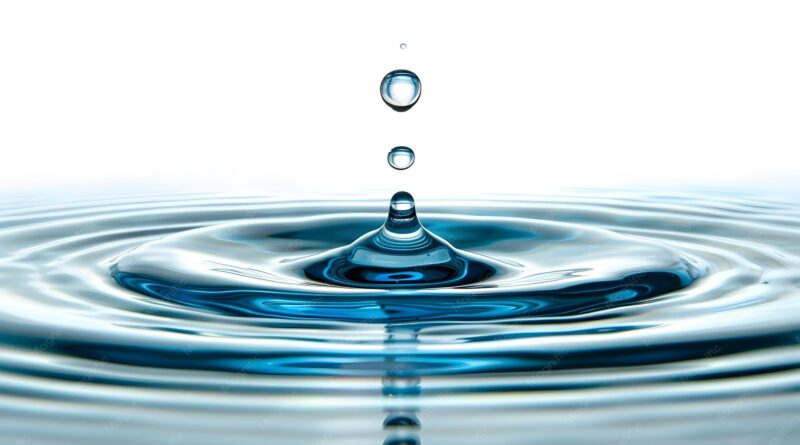
Water Drop Erosion Experiment: The Surprising Physics Behind How a Single Drop Can Carve Stone
The water drop erosion experiment conducted at the University of Twente has revealed a surprising physical mechanism showing how a single drop can deform even the hardest stone.
There is an image everyone carries in their mind: a drop of water falling on the same spot, day after day, year after year, until the stone finally gives in. It is an ancient image, almost proverbial, used to explain patience, persistence, the power of small things. But for centuries it has also been a scientific mystery. How could a simple drop of water, so light and fragile, deform a hard, compact, resistant rock?
In 2026, a research group at the University of Twente in the Netherlands demonstrated that yes, a single drop can truly carve stone. And not through magic, not through chemical erosion, not through mechanical abrasion. It happens through a surprising physical phenomenon, invisible to the naked eye, occurring in a fraction of a second. The discovery was published in Physical Review Fluids and reported by ScienceDaily on June 3, 2026. It is one of those studies that change the way we look at the world, because it reveals that even what seems simple hides a profound complexity.
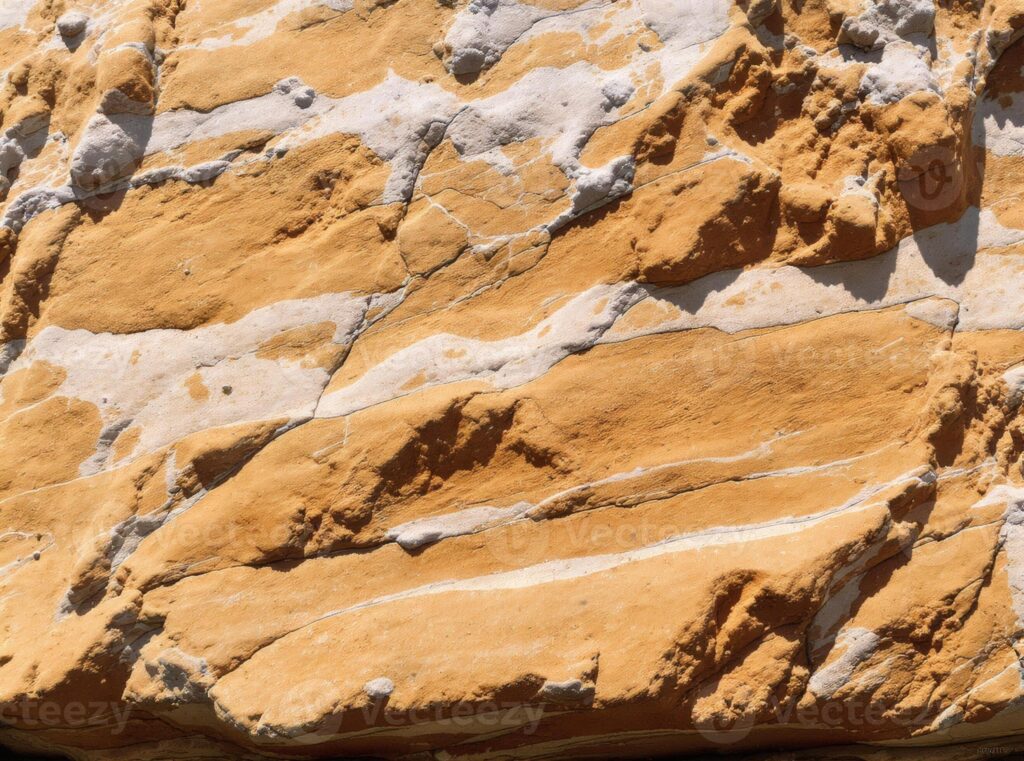
The story begins with a question geologists have carried for decades: why do some rock surfaces show perfectly circular micro‑craters, as if struck by tiny projectiles? They are not signs of wind, nor sand, nor chemical processes. They are too regular, too symmetrical, too similar to high‑energy impacts.
The Twente team decided to investigate. They built an experimental apparatus capable of releasing single drops of water onto surfaces of stone, metal and ceramic, controlling with millimetric precision the speed, angle and temperature. The drops fell from a height of just a few centimeters, reaching a velocity of about three meters per second — the same as an ordinary raindrop.
At first glance, the impact looked harmless. A drop flattening, spreading, bouncing slightly, then sliding away. But when the researchers observed the scene with a high‑speed camera — twenty thousand frames per second — they saw something no one had ever noticed before.
At the exact moment of impact, the drop generates a pressure wave that spreads across the surface like a microscopic hammer. It is a circular, symmetrical wave lasting less than fifty microseconds, yet capable of exerting a surprising force: up to fifty atmospheres of localized pressure. For an infinitesimal instant, the drop becomes a tiny liquid projectile.
This pressure is not enough to break the stone in a single strike. But if the impact repeats thousands, millions, billions of times — as it does in nature — the surface begins to deform. Micro‑craters appear, micro‑fractures, micro‑depressions. The stone yields, slowly but inevitably.
The phenomenon was observed on granite, basalt, limestone, technical ceramics and even hardened steel. In every case, the drop left a mark. Not visible to the naked eye, but unmistakable under an electron microscope.
The discovery surprised even the researchers. For years, it was believed that liquid‑impact erosion mattered only in extreme contexts: hydroelectric turbines, helicopter blades, high‑speed ship hulls. In those cases, water strikes surfaces at enormous velocities, generating cavitation, shock and abrasion. But the idea that a simple raindrop could do the same, even in a reduced form, was considered unlikely.
Yet the data are clear. The drop is not a passive object. It is a dynamic system that, at the moment of impact, concentrates energy into a tiny point. The pressure wave it generates is enough to modify solid matter.
The team also discovered that the shape of the drop influences the damage. A perfectly spherical drop produces a more symmetrical and intense impact. A drop deformed by wind generates an irregular pressure wave, capable of creating asymmetric fractures. This explains why some rock surfaces show complex, almost artistic patterns, as if sculpted by an invisible craftsman.
The discovery has enormous implications for geology. It helps explain why some rocks exposed to rain show circular erosions while others do not. It depends on composition, porosity, microstructure. Limestone, being softer, deforms more quickly. Basalt, harder, requires more time. Granite, with its crystalline structure, shows particular patterns, with micro‑fractures following mineral lines.
But the implications extend beyond Earth. On Mars, NASA has photographed rock surfaces with circular micro‑craters that do not appear to be caused by meteor impacts. Some geologists have hypothesized that they may have been formed by ancient rainfall or impacts of sublimated ice. The Twente discovery provides a physical model that makes this hypothesis more credible.
Temperature also plays a role. At lower temperatures, the drop is more rigid and compact, generating a stronger impact. At higher temperatures, it is softer and more deformable, producing a weaker pressure wave. This may explain why rain erosion is more intense in cold climates than in tropical ones.
Engineers have taken notice as well. Infrastructure exposed to rain — bridges, statues, historical buildings — may be subject to micro‑erosion more intense than previously thought. Not enough to cause immediate damage, but enough to contribute to long‑term degradation.
The phenomenon was also observed on metallic surfaces. Hardened steel, used in turbines and engines, shows micro‑craters similar to those found on rocks. This could help improve the design of materials more resistant to liquid impact.
Yet the most fascinating part of the study is its simplicity. A drop of water. A stone. An impact lasting less than the blink of an eye. And a mark that remains forever.
Science does not always need particle accelerators or space telescopes to reveal the mysteries of the universe. Sometimes, a falling drop is enough.
And so, in 2026, a surprising experiment confirmed what popular wisdom had intuited for centuries: the drop carves the stone. Not through magic, not through patience, but through physics — an invisible, powerful, elegant physics.
The University of Twente’s discovery is not only a contribution to geology. It is a reminder that even the smallest things can change the world, that nature is more complex than it appears, that every impact, even the slightest, leaves a trace.
And that science, when it looks closely, finds wonder everywhere.
At the end of this exploration into the hidden physics behind erosion, Zemeghub invites readers to continue the journey across the discoveries that are reshaping our understanding of matter, energy and the forces that sculpt the world around us. If you want to dive deeper into the breakthroughs defining 2026, here are three stories from our Science & Discovery archive that expand the conversation even further.
The first takes you inside the laboratories where Personalized mRNA Cancer Vaccines are becoming a reality. Published on 1 July 2026, this feature reveals how medical vials, syringes and sequencing tools are being transformed into instruments of precision oncology, opening a new frontier in individualized cancer treatment.
The second story brings you into the heart of a device unlike anything built before: the nuclear clock. Released on 14 June 2026, this article examines how thorium‑229 enabled the creation of the first nuclear clock — a breakthrough that could transform physics, dark‑matter research and the way humanity measures time itself.
The third article explores the invisible architecture of our biology: immune system memory. Published on 9 June 2026, it illustrates how the human body interacts with pathogens and internal biological signals to build long‑term defensive responses, revealing one of the most powerful concepts emerging in modern medicine.
