
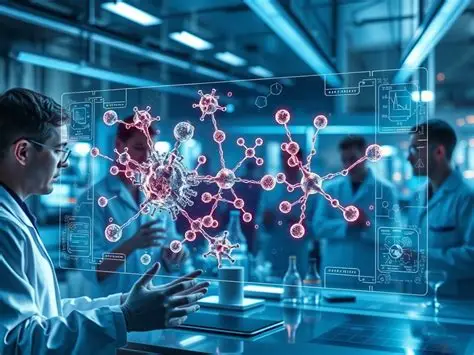
AI creates viruses to fight bacteria: the new frontier of synthetic biology
AI creates viruses to fight bacteria, and recent research from Stanford University and the Arc Institute demonstrates that artificial intelligence can now design fully functional bacteriophages capable of infecting and eliminating E. coli. This development marks a significant shift in synthetic biology and opens new possibilities for combating antibiotic resistance.
In 2026, biotechnology reached a turning point that would have been considered unrealistic just a few years earlier: artificial intelligence was used to design entirely new viruses capable of infecting and killing bacteria. This was not a theoretical experiment or a simulation. It was a concrete result, achieved in a laboratory by researchers at Stanford University and the Arc Institute, who demonstrated that advanced generative models can create functional bacteriophages that have never existed in nature.
The work was published in Science and immediately drew the attention of the international scientific community for a precise reason: it represents the first evidence that AI can generate complex genetic sequences that are not only biologically plausible but also operational. In other words, AI is no longer limited to predicting or analyzing biology; it is producing it.
The implications are significant. For decades, synthetic biology has relied on human-designed modifications to existing organisms. Now, for the first time, an algorithm has generated biological entities from scratch.
The technology used in this study is based on two models called Evo 1 and Evo 2. These systems analyze vast amounts of genetic data and generate new sequences based on evolutionary rules learned from the dataset. They do not operate like traditional genetic editing tools. They do not modify existing viruses. Instead, they propose entirely new genomes.
The researchers divided the process into three main phases. First, they trained the models on millions of natural viral sequences. Then, they generated hundreds of new bacteriophage genomes. Finally, they synthesized and tested the most promising sequences in the laboratory. In total, the AI produced 302 genomes. Of these, 285 were synthesized. The final result was unexpected: sixteen artificial viruses were fully functional, capable of infecting and replicating inside E. coli bacteria.
The motivation behind creating artificial viruses is primarily medical. Antibiotic resistance is one of the most serious health emergencies of the twenty-first century. According to the World Health Organization, hundreds of thousands of people die every year from infections that no longer respond to available drugs. Bacteriophages, viruses that infect only bacteria, are considered a possible alternative to traditional antibiotics.
The problem is that natural phages are not always effective against the most resistant bacteria. Some strains have developed defenses that render natural viruses useless. Designing artificial phages allows researchers to overcome this limitation. AI can create optimized viruses capable of targeting specific bacteria, including those that have developed barriers against natural phages.
In several tests, the viruses created by AI proved more effective than their natural equivalents. One in particular, named Evo‑Φ69, showed a replication capacity superior to the natural phage ΦX174, with an increase of up to sixty-five times compared to the initial value.
The creation of functional artificial viruses represents a significant advancement for synthetic biology. Until now, designing biological machines required a detailed understanding of genetic structures and molecular interactions. With generative models, this process can be automated. The key point is that AI does not simply imitate nature. It identifies evolutionary patterns and uses them to propose solutions that nature has never produced.
Several experts, including Marc Güell and Patrick Cai, have stated that this result indicates that biology is entering a computational phase. The rules of evolution can be learned by models, and once learned, they can be applied to generate new biological forms.
If the technology continues to develop, it could lead to personalized therapies against resistant infections. In the future, a hospital could sequence the bacterium responsible for an infection, send the data to an AI model, and receive a virus designed to target it within hours. The phage would be synthesized, tested quickly, and administered to the patient.
This scenario is not immediate, but it is considered plausible. Phages are already used in some countries as experimental therapy, and the ability to create them on demand could make their application far more effective.
The same technology that allows the creation of useful viruses could, in theory, be used to generate harmful ones. This is the most delicate aspect of the entire development. The authors of the study adopted strict safety measures: the models were trained only on viruses harmless to humans, and the tests were conducted exclusively on bacteriophages. However, the scientific community has emphasized that the ability to generate artificial viral genomes requires global governance. There are no international rules defining who can use these models, under what limits, and under which conditions.
The risk is not immediate, but it is real. Programmable biology is a new field, and like any emerging technology, it requires adequate controls.
The next step could be the design of more complex organisms. Viruses are relatively simple: their genomes are short and their functions limited. Living organisms, on the other hand, have much longer genomes and more articulated cellular structures. Despite this, some researchers believe that AI could eventually contribute to the design of synthetic cells or entirely new microorganisms.
This does not mean creating complex or dangerous life forms, but developing biological tools useful for medicine, agriculture, industrial production, or scientific research. The technology is still in its early stages, but the result obtained in 2026 represents a starting point. It is proof that AI can generate functional biology. From now on, the question is no longer whether it will be possible, but how it will be regulated and in which directions it will be developed.
The creation of artificial viruses through artificial intelligence is one of the most significant results in modern biology. It offers new possibilities for combating antibiotic resistance, opens the door to personalized therapies, and introduces a new paradigm in biological design. At the same time, it requires attention, regulation, and responsibility.
AI‑generated biology is no longer a theoretical concept. It is a scientific reality. And from this point forward, the way it is managed will determine its impact on medicine, global security, and the future of research.
Read also: Latest Biotechnology Breakthroughs 2026: How Living Systems Are Learning to Heal, Adapt, and Compute
