The Longevity Limit: When Time Rebels Against the Dream of Human Immortality
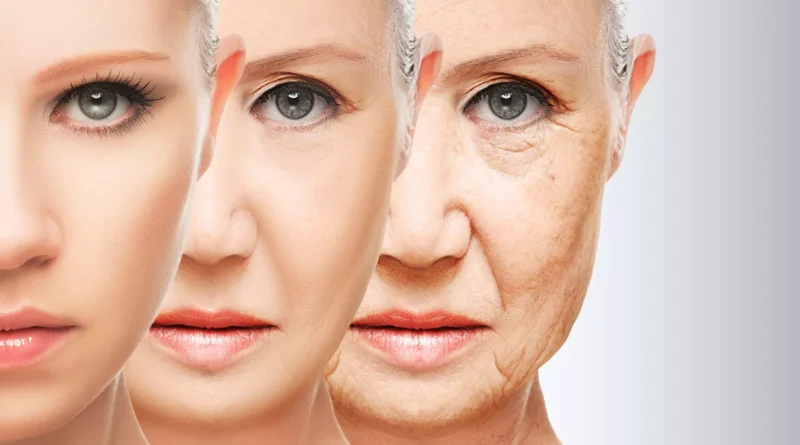
The longevity limit has always been a silent question hiding beneath our fascination with immortality. It lingers in the background of human thought, resurfacing in myths, religions, scientific debates, and late‑night conversations where people wonder what it truly means to exist. For centuries, humanity has asked whether life has a natural boundary or if that boundary is simply a biological rule waiting to be rewritten. Modern science, with its precision and its imagination, tries to answer this ancient curiosity. And a recent study does not promise eternity, but instead reveals a deeper truth about the fragile architecture of our existence.
Imagine a world where aging is no longer part of the human experience. A world where medicine stops muscle decline, prevents dementia, shields the heart from failure, and erases every age‑related disease as if it were nothing more than a typing mistake. Picture hospitals where no one enters because of age, only because of accidents or rare conditions.
Picture families where grandparents remain physically strong, mentally sharp, and emotionally present for centuries. This is the scenario simulated by researchers at the Skolkovo Institute of Science and Technology, published in npj Aging. What emerges is not a celebration of immortality, but a more complex and almost ironic discovery: even without aging, humans cannot escape the biological ceiling that defines their time on Earth.
The limit does not come from wrinkles, weakening bones or fading memories. It comes from something quieter and more inevitable: somatic mutations. These tiny alterations in DNA accumulate every time a cell divides or repairs itself. They cannot be erased, corrected or reversed. They are grains of sand slowly filling the gears of life until the mechanism slows, jams and eventually stops. Even in a perfect world, even in a body free from disease, these mutations continue their silent work, shaping the ultimate destiny of every human being.
The researchers built a mathematical model to understand what would happen if everything else were perfect. If disease disappeared, if the brain never degenerated, if the heart never tired. They removed every known cause of aging and left only the accumulation of mutations active. And the result is astonishing: the human longevity limit under ideal conditions would average around 156 years, with a theoretical maximum approaching 200. Not eternity, but a lifespan that today feels almost mythical, almost like the stories of ancient patriarchs who lived for centuries.
The most fragile points of the human body are not the lungs or the immune system. They are the brain and the heart. Neurons and cardiac muscle cells do not regenerate like other tissues. When they are lost, they are lost forever. This sets a biological ceiling that no technology can currently surpass. The brain could accompany us to about 194 years, the heart to roughly 208. Beyond that, the system collapses. It is not a dramatic collapse, but a slow, inevitable decline, like a candle that burns beautifully but cannot burn forever.
Other organs seem almost timeless. The liver, with its extraordinary regenerative ability, could function for centuries. The respiratory tract, constantly renewing itself, could endure far longer than the rest of the body. The skin, the intestines, the blood — all these systems have built‑in renewal mechanisms that could theoretically sustain life for an incredibly long time. But life is not a collection of independent parts. It is a single orchestra, and when one instrument breaks, the music ends. The heart and the brain, the two centers of human identity and vitality, are the instruments that ultimately define the length of the symphony.
There is a detail that makes the study even more fascinating. If somatic mutations did not exist, if DNA remained perfect and untouched, the theoretical human lifespan could reach 1,759 years. A number that sounds like it belongs to ancient myths or forgotten civilizations. It evokes images of people living through entire eras, witnessing the rise and fall of empires, carrying memories that span millennia. But it is only mathematics, not reality. The real world is governed by imperfection, by entropy, by the slow erosion written into the very fabric of life.
Reality is simpler and more poetic. Our genetic code carries an invisible timer, not a dramatic countdown but a slow erosion that reminds us that life is finite. And perhaps this finiteness is what makes it precious. The study does not destroy the dream of immortality; it reshapes it. It tells us that even if we defeat aging, a final boundary will remain, written in the very material that forms us. It suggests that immortality is not a biological state but a philosophical idea, something that belongs more to imagination than to science.
So the question changes. No longer can we live forever, but how long can we truly live — and above all, what will we do with the time we are given. The longevity limit is not just a scientific concept; it is a reminder that life, even extended, remains a story with a beginning and an end. And the value of a story is not measured in its length, but in the meaning we give to every chapter.
At the end of this exploration into the biological boundaries of human life, Zemeghub invites readers to continue their journey through the scientific frontiers that are redefining 2026. Every discovery opens a new window into the hidden mechanics of reality, and two recent investigations from our Science and Discovery archive expand this conversation even further.
The first takes you inside one of the most intriguing research efforts of the year: Memory of Matter 2026 Scientific Discoveries. Published on 14 August 2026, this feature follows scientists working in remote outdoor research stations as they uncover what matter can “remember” — subtle physical imprints, structural echoes, and long‑hidden signatures that modern instruments are finally able to detect. It is a story about perception, about the silent history written inside the materials that surround us, and about how science is learning to read that history for the first time. Read More
The second article returns to one of the most surprising physics experiments of the summer: Water Drop Erosion Experiment. Published on 8 August 2026, it reveals how a single falling drop — something so ordinary we barely notice it — can carve stone over time. Through splash dynamics, micro‑fractures, and the relentless precision of natural forces, researchers show how simplicity becomes power. It is a reminder that even the smallest actions of nature can reshape the world when given enough time. Read More
