Invisible Watermark Claude AI Act: How a European Rule Changed an American AI
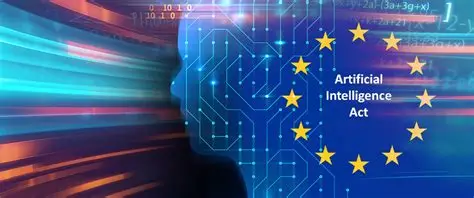
Invisible Watermark Claude AI Act is not just a technical requirement or a bureaucratic detail. It is the strange moment when a European regulation reached across the ocean and reshaped the behavior of an American AI model, Claude, forcing Anthropic to adopt a hidden signature in every generated text, no matter where in the world it is produced.
When Europe decided to push forward its AI Act, nobody really imagined how a regulation written in Brussels could end up shaping the way an American model like Claude writes text everywhere in the world. Yet that is exactly what happened.
Anthropic, the company behind Claude, suddenly found itself standing in front of a strange kind of crossroads: either build a special version of the model only for Europe, with the mandatory invisible watermark, or apply that watermark to every region, every user, every output. The choice wasn’t really a choice at all. Keeping two different versions of the same AI would have been too expensive, too messy, too risky. So the invisible watermark, originally born to satisfy a European requirement, quietly became global.
From that moment on, every word Claude generates carries a hidden signature. You don’t see it, you don’t feel it, you don’t notice anything. It’s like a tiny statistical shadow, a microscopic modulation in the language that only Anthropic’s own tools can detect.
For Europe, this is transparency. For many users, though, it feels more like a limitation. And in the last months, people started whispering that Claude is losing subscribers. Not because the model got worse, but because a part of the audience simply doesn’t want marked content, content that can be traced or recognized. They don’t want every sentence to carry an invisible fingerprint.
This is where the story becomes interesting. Because while companies talk about watermarking, compliance, transparency and all those big words, users keep doing what they’ve always done: experimenting. And it’s exactly in this grey zone, between advanced technology and everyday gestures, that one of the most surprising intuitions appears.
A user takes a text generated by Claude, pastes it into the Windows Notepad, copies it again, and pastes it where he needs it. And he discovers that the invisible signature is gone. Not because he used a trick, not because he tried to bypass a law, but simply because Notepad is a primitive editor, unable to preserve any hidden structure. It reduces the text to its most basic form, flattens it, normalizes it. And in that brutal process, the invisible watermark breaks apart.
The funny thing is that this intuition doesn’t come from a technical manual or some online guide. It comes from a spontaneous gesture, almost accidental. It comes from the fact that the oldest tools on a computer, the ones nobody pays attention to anymore, still have enormous power: they erase everything that isn’t visible. WordPad does the same, with a slightly more elegant touch but with the same brutality toward metadata and hidden structures. It’s a fascinating contrast: on one side the AI Act, European lawmakers, billion‑dollar companies building invisible watermarks; on the other side a text editor from the 1990s that, without even trying, destroys them.
This story tells much more than just technology. It tells the relationship between the user and artificial intelligence. It shows how European regulations are influencing the entire world, forcing American companies to change their global models. It shows how transparency, when it becomes mandatory, can turn into a source of frustration. It shows how Europe, in its attempt to regulate AI, is basically imposing standards that spread everywhere, even where nobody asked for them.
But above all, it reveals a truth that is often forgotten: the most advanced technology in the world can be challenged by a simple gesture, by a primitive editor, by a user who observes, tries, fails, tries again, and eventually discovers something nobody told him. It’s a powerful reminder. AI runs fast, companies adapt, regulations expand, but the user remains at the center, with his ability to understand, experiment, and find solutions that were never planned.
Zemeghub lives exactly in this space, where technology meets human experience. Where global stories intertwine with personal intuitions. Where the European AI Act is not just a law, but a starting point to understand how the digital world is changing. And where an invisible watermark becomes the symbol of a larger battle: the one between control and freedom, between transparency and autonomy, between what companies decide and what users discover on their own.
If you want to explore one of the strangest stories in the current AI landscape, you can dive into Ox Alpha AI: The Most Mysterious AI of 2026, where the official branding and logo of Ox Alpha AI reveal a project wrapped in secrecy and speculation.
And if you’re curious about how machines sometimes seem to discover unexpected paths in mathematics, you can read AI Mathematical Intuition: When Machines Seem to Find Unexpected Paths in Mathematics, a story that visualizes a robot navigating a world of equations and symbols while researchers debate the nature of machine intuition.
