
Nuclear Energy Geopolitics: The Critical Global Race for Power, Security and Industrial Sovereignty
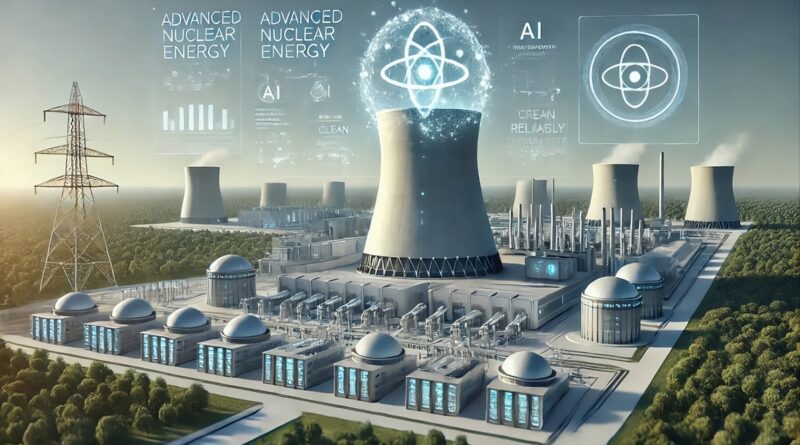
Nuclear Energy Geopolitics has emerged as one of the defining issues of the twenty-first century. As nations seek energy security, industrial resilience, and technological leadership, nuclear power is returning to the center of global strategic competition.
For decades, it was dismissed as a relic of the twentieth century, a heavy legacy of Cold War tensions and environmental fears. Today, in a quiet yet determined shift that is breaking the ideological taboos of an entire generation, nuclear energy is re-emerging as one of the most valuable currencies on the table of global geopolitics. This is no longer merely an energy policy choice aimed at reducing emissions or easing electricity costs. Instead, it has become part of a broader race for strategic resources, driven by two powerful forces that are reshaping the geography of global influence: the insatiable appetite of the digital revolution and the fierce competition among the world’s geopolitical blocs.
This transformation illustrates how Nuclear Energy Geopolitics is becoming a central factor in shaping the future balance of power.
The Thirst of Algorithms and the Return of Reactors
The force reopening the door to this nuclear renaissance is not climate diplomacy but the financial projections of Silicon Valley’s technology giants. The widespread adoption of artificial intelligence and the rapid expansion of vast data centers have created an unavoidable reality: modern servers require a constant, stable, and enormous supply of electricity, a demand that intermittent sources such as solar and wind power cannot satisfy on their own.
Faced with this challenge, major technology companies have moved beyond the role of energy customers and become active investors in power infrastructure. They are signing direct agreements with nuclear plant operators and advocating for the restart of reactors that have remained dormant for years. It is a fascinating paradox in which the most advanced technology of tomorrow, the algorithm designed to emulate human cognition, ultimately depends on the power generated by atomic fission.
At the heart of Nuclear Energy Geopolitics lies the struggle to control fuel supply chains, reactor technologies, and the industrial ecosystems that support them.
The Cold War of Raw Materials and Modular Reactors
While major corporations secure their energy future, nation-states are engaged in a parallel struggle for industrial sovereignty. Although oil and natural gas remain vulnerable to Middle Eastern conflicts and maritime supply bottlenecks, the strategic battlefield of the future has shifted toward nuclear technology and the supply chains that support it.
The Western response to the high costs and lengthy construction timelines of traditional nuclear plants is increasingly focused on small modular reactors, flexible systems that can be manufactured in factories and deployed directly alongside major industrial hubs. Yet the competition extends even further upstream. The ability to enrich uranium and secure control over critical minerals has become equally important, and in these sectors Eastern powers continue to hold significant advantages. Western nations are therefore seeking to close the gap through new industrial partnerships and strategic alliances.
Europe and the Competitiveness Dilemma
Amid these sweeping global transformations, Europe stands at a crucial crossroads. The continent’s energy costs remain significantly higher than those of competitors across the Atlantic and the Pacific, raising concerns about a gradual process of deindustrialization that could weaken some of its most energy-intensive manufacturing sectors.
The debate surrounding next-generation nuclear power, once confined to a limited number of pro-nuclear nations, is now gaining momentum across the continent. Even countries that have historically been skeptical are beginning to reconsider their long-term energy strategies. This is not a surrender to the technologies of the past, but rather a pragmatic calculation. In an era defined by global competition, energy security and industrial autonomy have become inseparable from the stability and reliability of a nation’s sources of power.
The Invisible Horizon: Fusion, Waste, and the Battle for Industrial Dominance
If the first stage of this nuclear revival is driven by the immediate need to power today’s markets, the real geopolitical contest of the coming decades will unfold on a much deeper level: the conceptual transformation of nuclear energy and the management of its most complex legacies. The challenge is no longer limited to supplying electricity for artificial intelligence servers over the next few years. It is about determining who will hold the technological and commercial leadership of clean energy throughout the twenty-first century.
Western governments and Asian state planners alike understand that dependence on fossil fuels cannot simply be replaced by a new form of strategic vulnerability. As a result, the race for innovation is increasingly shifting toward commercial fusion and closed fuel cycle technologies, where national sovereignty and scientific leadership become inseparable.
New Fuel Routes and the Geopolitical Waste Dilemma
There is a shadow side to this energy renaissance that global policymakers can no longer afford to ignore: the uranium value chain and the long-term management of nuclear waste. For years, the separation between extraction sites and refining capabilities created an underestimated strategic imbalance, leaving many countries dependent on foreign markets for fuel enrichment.
Today, rebuilding secure national and multilateral supply chains has become a strategic imperative comparable to safeguarding key maritime routes. At the same time, research into advanced reactors capable of consuming or significantly reducing their own waste is transforming what was once one of the strongest political arguments against nuclear energy into a high-value investment sector. These technologies have the potential to reshape public perceptions of the entire nuclear industry while addressing one of its most persistent challenges.
The New Energy Order and the Risk of Fragmentation
This reorganization of the nuclear landscape is accelerating the emergence of a technologically and regulatorily multipolar world. The industry is no longer centered on the sale of turnkey facilities alone. Instead, nations are exporting entire industrial, financial, and geopolitical ecosystems. A country that builds a reactor in a foreign market can influence its energy choices and strategic alignments for decades to come. Yet the growing competition among American, Asian, and European safety standards carries a significant risk: the fragmentation of the global market into technologically incompatible blocs.
For manufacturers and consumers alike, the success of this transition will depend on the ability of Western democracies to balance rigorous oversight with the speed of execution required to ensure stable energy prices and secure supply chains, preventing the clean energy transition from becoming a source of long-term geopolitical decline.
The West’s Gamble and the Inevitable Moment of Choice
The path toward this new energy order will not be free of obstacles. As countries race at different speeds to secure every available megawatt, Western nations are being forced to confront one of their longstanding weaknesses: bureaucratic inertia and fragmented approval processes. The ability to deliver strategic infrastructure within the timelines imposed by global competition will determine who leads the transition and who merely bears its costs. The challenge is no longer limited to funding research or signing memoranda of understanding. It is about building a resilient industrial ecosystem capable of training hundreds of thousands of highly skilled specialists and attracting the private capital required to transform laboratory prototypes into highly efficient operational facilities.
Toward a Hybrid and Integrated Model
The true maturity of this new nuclear era will depend on its ability to position itself not as an exclusive alternative but as an essential complement to other clean energy sources. The future of the global power grid does not belong to a single dominant technology. Instead, it belongs to an integrated ecosystem in which solar and wind energy provide production peaks while nuclear power delivers the uninterrupted baseload electricity required by heavy industries, data centers, and major metropolitan areas. This synergy between the flexibility of renewable energy and the reliability of nuclear power represents the most realistic pathway toward decarbonization without sacrificing economic growth or the social stability of advanced economies.
The outcome of Nuclear Energy Geopolitics will influence not only energy markets but also the geopolitical and economic architecture of the twenty-first century.
The Future of Energy on Tomorrow’s Geopolitical Chessboard
We are witnessing a transformation that extends far beyond the traditional debate between fossil fuels and renewable energy. Energy has once again become what it has always been during pivotal moments in history: the true measure of national power and autonomy. In the world now taking shape, the capacity to generate secure, continuous, and geopolitically resilient electricity will not simply be a competitive advantage for businesses or a benefit for consumers. It will be a fundamental requirement for preserving political sovereignty and industrial relevance on the global stage. The race surrounding next-generation nuclear technology has only just begun, and its outcome will shape the balance of power across the planet for decades to come.