OpenAI ends Cursor access: the Musk–Altman conflict enters the AI coding market
OpenAI ends Cursor access after the SpaceX acquisition
On August 28, OpenAI announced that it will end the provision of its artificial intelligence models to Cursor, one of the most widely used tools among developers for writing and modifying software with the help of AI. The decision comes just two weeks after SpaceX, the company led by Elon Musk, completed its acquisition of Cursor.
The date set by OpenAI for the termination of direct access to its models is November 12, 2026. This means the cutoff is not immediate: until that deadline, Cursor is expected to continue using OpenAI’s models under the existing agreements. Both parties have also confirmed that discussions are still ongoing to explore possible solutions.
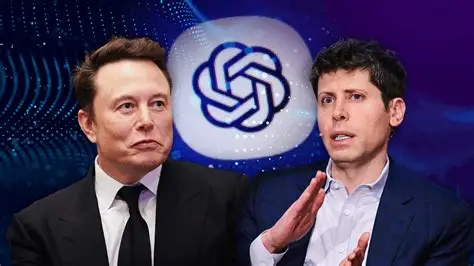
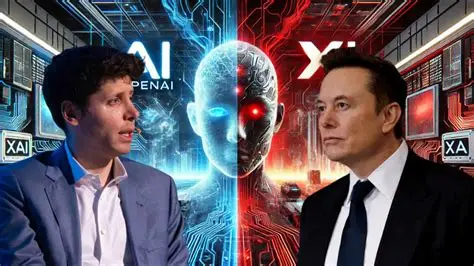
However, the issue goes far beyond a simple commercial dispute. Behind the technical matter lies one of the most contentious relationships in the tech industry: the rivalry between Elon Musk and Sam Altman. OpenAI’s decision shows how the conflict between the two has begun to produce concrete consequences for companies, developers, and users caught in the middle of the competition between major AI laboratories.
Cursor becomes part of SpaceX
To understand OpenAI’s decision, we must start with the operation that changed Cursor’s position in the market.
Cursor is the flagship product of Anysphere, a company that built a development environment centered around artificial intelligence. The program allows developers to work on code by conversing with AI models, requesting modifications, generating functions, identifying issues, and delegating an increasing portion of tasks that were traditionally performed manually.
On August 14, Cursor officially announced that it had become part of SpaceX. The company explained that the acquisition would give the team access to enormous computing capacity and accelerate the development of its models and tools. Cursor also introduced Grok 4.6—developed within the SpaceX ecosystem—as one of the first examples of this new phase.
The acquisition, valued at around $60 billion in stock, is one of the most significant operations in the AI‑powered software tools sector. Reuters confirmed that the deal was completed in early August.
For Cursor, joining SpaceX means transitioning from an independent startup to a company directly embedded in Musk’s technological ecosystem.
And it is precisely this change in ownership that triggered the problem with OpenAI.
OpenAI: “We cannot be certain SpaceX will respect our terms”
In its August 28 statement, OpenAI explained that it had notified SpaceX of its intention to gradually terminate the contract that allows Cursor to use its models.
The reason given by the company is particularly significant. OpenAI claims it cannot be sure that SpaceX will use its technology in compliance with its terms of service, citing previous contractual disputes involving Musk‑controlled companies.
According to OpenAI, Cursor itself did not commit any specific violation that would justify expulsion from the service. The issue arises from the change in control and the possibility that, after the acquisition, the conditions under which OpenAI provides its models may no longer be sufficiently guaranteed.
This is an important detail because it changes the interpretation of the entire situation.
OpenAI is not simply saying that a customer broke the rules. It is saying that the new ownership introduces a level of contractual and operational risk it is unwilling to accept.
The agreement between OpenAI and Cursor includes a change‑of‑control clause that allows OpenAI to cancel the contract within a limited period after an acquisition. OpenAI chose to use the final date allowed by the contract, setting November 12 as the proposed termination.
Why OpenAI references Musk’s companies
In its statement, OpenAI did not limit itself to discussing Cursor’s new ownership. It linked the decision to previous incidents involving other Musk‑controlled companies.
The company specifically cited the management of Twitter—now part of the SpaceX ecosystem—and a dispute involving xAI. OpenAI claims that after Twitter’s acquisition, contractual agreements were violated, and that Musk admitted under oath, during a legal proceeding, that xAI had violated OpenAI’s terms.
The message is clear: for OpenAI, the history of Musk‑controlled companies is enough reason not to automatically transfer Cursor’s contract to the new owner.
This position is likely to spark debate, especially because the commercial relationship with Cursor had lasted nearly four years. OpenAI itself acknowledged its respect for the product and the team behind it.
The decision, therefore, does not stem from a negative judgment about Cursor’s value as a tool for developers. On the contrary, OpenAI emphasizes how important the product is for the developer community.
Cursor does not depend solely on OpenAI
Another key element is that Cursor is not built around a single model.
The service uses models from multiple providers. This means that ending the agreement with OpenAI does not automatically mean the end of Cursor.
According to Reuters, Cursor co‑founder Michael Truell indicated that OpenAI models represent about 5% of the platform’s traffic. If this figure remains accurate, the direct operational impact may be far smaller than the headlines suggest.
Cursor can rely on models from other major players. Anthropic, in particular, has a strong presence in the ecosystem and has announced plans to increase support for Claude on the platform. Cursor also integrates models from SpaceX and xAI.
For users, this means the platform should not suddenly stop functioning on November 12.
The real change concerns access to OpenAI’s models—and especially future models that OpenAI might have made available on the platform.
The real problem may be the model that will not arrive
The most interesting part of the decision does not necessarily concern what Cursor will lose in November, but what it may not receive in the future.
OpenAI explained that, following the decision, it does not intend to provide Cursor with its future models. The company explicitly mentioned Astra, the upcoming model it considers particularly important in terms of capabilities and safety requirements.
This creates an unusual situation.
Cursor will continue to have access to competing models, but may not be able to offer users every new generation developed by OpenAI. In the market for AI coding tools—where model performance evolves rapidly—losing access to a new generation can be more significant than losing access to an existing model.
In other words, the problem is not just replacing a model.
It is keeping Cursor competitive when the quality of code‑generation systems can change dramatically every few months.
Anthropic may be one of the main beneficiaries
Whenever a major model provider reduces its relationship with a platform, competitors gain an opportunity.
In this case, one of the most interested players is Anthropic.
Claude is already widely used in AI‑assisted programming tools, and Cursor has a long history of integrating different models. Reuters reports that Anthropic intends to increase support for Cursor precisely as OpenAI prepares to exit the agreement.
This makes the situation even more interesting from a competitive standpoint.
OpenAI risks losing part of the distribution of its models through a platform highly visible among developers, while Anthropic can gain additional ground. Cursor, for its part, can leverage competition among providers to avoid excessive dependence on a single company.
And SpaceX has an even stronger incentive to develop and integrate its own technology.
SpaceX wants to control more of the AI supply chain
In its acquisition announcement, Cursor emphasized the advantage of accessing SpaceX’s computing capacity and developing more powerful and cheaper‑to‑run models.
This is a strategic shift.
In the AI sector, a vertical model is increasingly emerging: computing infrastructure, chips, and data centers on one side; models on another; applications and user‑facing tools at the end of the chain.
With the acquisition of Cursor, SpaceX enters directly into the last layer of the chain: the application used daily by developers.
The company also has the xAI ecosystem and Grok models. Cursor has already introduced Grok 4.6 as one of the first results of collaboration with its new owner.
For this reason, the separation from OpenAI can also be seen as a natural consequence of a broader transformation: Cursor is no longer an independent platform that must maintain relationships with all major labs, but part of one of OpenAI’s main competitors.
The Musk–Altman rivalry inevitably weighs on the situation
It would be difficult to tell this story without discussing the relationship between Elon Musk and Sam Altman.
The two shared part of OpenAI’s early history, but over the years their relationship turned into open conflict.
Musk strongly criticized OpenAI’s transformation and the direction the organization took. The dispute even reached the courts, with a billion‑dollar lawsuit in which Musk accused OpenAI of abandoning its original mission. Reuters reports that the legal battle has been one of the central elements of their confrontation in recent years.
The decision regarding Cursor adds a new front to the competition.
This time, however, the battleground is not just a lawsuit or a public argument on social media.
Contracts, model access, and the position of a product used daily by a vast community of developers are at stake.
Musk reacted by publicly criticizing OpenAI and Altman, while Cursor maintained a pragmatic stance, emphasizing that discussions with OpenAI are ongoing.
What changes for Cursor users
For developers, the most immediate question is simple: what will happen on November 12?
Based on current information, Cursor will continue to exist and function, but direct access to OpenAI’s models is expected to end on the date indicated.
This does not mean users will lose access to AI programming tools.
Cursor has alternatives, and the company has a strong interest in ensuring the transition is as invisible as possible for end users.
The greatest risk concerns those who built their workflow around a specific OpenAI model or particular behaviors. Switching models can produce differences in response quality, reasoning ability, speed, and how complex tasks are executed.
For a professional developer, changing a model is not always like flipping a simple switch.
An integrated AI agent becomes part of how a person designs, verifies, and modifies software. Even small variations in model behavior can affect productivity.
A battle for control over developer relationships
The deeper meaning of this story likely lies here.
OpenAI, Anthropic, Google, and xAI are no longer competing only to have the best model. They are also competing to control the point through which users access those models.
For programmers, that point can be an editor like Cursor.
If millions of developers use an application that allows them to choose between different models, the value is not only in the underlying model. It is also in the interface, the agents, the project context, the code management, and the ability to turn a general‑purpose model into a concrete tool for daily work.
This is why SpaceX’s acquisition of Cursor carries more weight than a typical software‑sector operation.
Musk did not simply buy a startup that produces a code editor.
He acquired an important gateway to the developer market.
The story is still open
Despite OpenAI’s announcement, the story is not necessarily over.
OpenAI mentioned a proposed termination date of November 12, and Cursor confirmed that discussions are ongoing. This leaves open the possibility of a different agreement, although there are no official indications of a reversal.
The decisive point will be whether the two companies can build a new agreement that accounts for the change in ownership.
OpenAI may request additional guarantees regarding the use of its models. SpaceX may want greater autonomy for Cursor and its integration with the technologies of its group.
In the middle are the users, who have an interest in maintaining access to the widest possible choice of models.
An important precedent for the industry
The case may become a precedent for the rest of the market.
AI companies are increasingly signing customized agreements with platforms that distribute their models. When a startup is acquired by a competitor, these contracts suddenly become strategic.
The question emerging from this case is concrete: how transferable should a model‑supply agreement be when the owner of a platform changes?
If OpenAI can use a change‑of‑control clause to terminate its relationship with Cursor, other companies may adopt similar strategies.
This could lead to stricter contracts, deeper due‑diligence on acquirers, and specific conditions for companies that want to use third‑party models.
The result could be a more fragmented AI market.
This is not just a story about Cursor
OpenAI’s decision comes at a time when the AI sector is rapidly shifting from simple model competition to competition over the entire technological infrastructure.
SpaceX wants to unite computing capacity, models, and applications. OpenAI wants to maintain control over the use of its technologies and their standards. Anthropic is trying to increase its presence in developer‑focused tools.
Cursor sits exactly at the intersection of these interests.
For this reason, November 12 will not simply be the date when an API stops working.
It may be one of the moments that mark the transformation of the AI coding tools market.
For end users, the most visible consequence will likely be greater choice among different models. For the companies developing them, the lesson is much harsher: controlling the model does not necessarily mean controlling the application—but it does mean deciding who is authorized to use it.
And after Cursor’s acquisition by SpaceX, OpenAI chose to exercise that power.
The date to watch, for now, is November 12, 2026. Until then, negotiations may still change the situation. If the agreement is not modified, Cursor will need to prepare to operate without direct access to OpenAI’s models and strengthen its multi‑model strategy, while SpaceX continues to push its AI ecosystem forward.
The Musk–Altman conflict is no longer just personal or legal.
It has become a matter of models, contracts, platforms, and control over the technology that millions of people are learning to use to program.
Google Gemini Omni 1.1 Flash video AI: the truth behind the 40‑second clips and the fake 4K artificial intelligence — 28 August 2026 — Bernardin Moreardino
A deep look into the real story behind Gemini Omni 1.1 Flash’s viral 40‑second clips, exploring the futuristic interface, the generative editing tools, and the controversy surrounding the so‑called “fake 4K” that sparked global debate in the AI video community.
Future of Artificial Intelligence: the invention that could change all the others artificial intelligence — 24 August 2026 — Bernardin Moreardino
A forward‑looking exploration of the future of artificial intelligence, where human insight merges with next‑generation machine intelligence, creating a technological turning point that could redefine every other invention that follows.
