
Food Geopolitics: Supply Chains and National Security
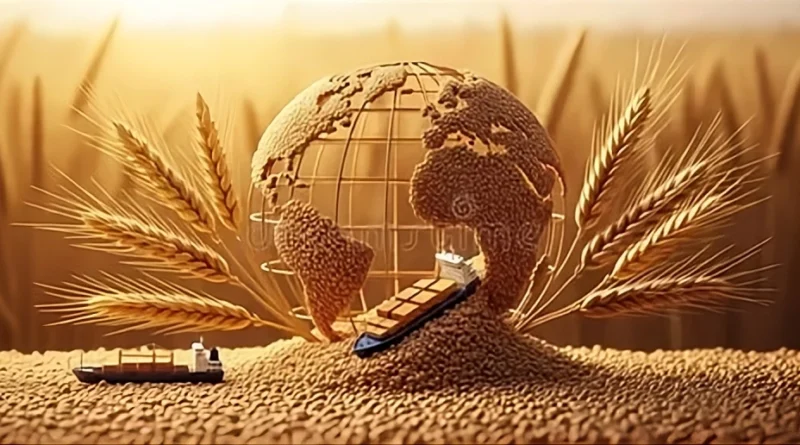
Food geopolitics has become a central issue in international security, as global supply chains, fertilizer dependencies, and maritime trade routes increasingly shape the ability of nations to feed their populations and preserve national sovereignty.
The Rise of Food Geopolitics and Global Supply Chain Vulnerability
Food has always been more than a commodity. It sustains populations, underpins political stability, and shapes the relationship between governments and the societies they govern. In an increasingly interconnected world, however, the ability to feed a population depends on far more than the agricultural capacity of individual nations. It rests on a complex network of international trade, maritime infrastructure, energy supplies, fertilizer production, and technological capabilities. When these systems function smoothly, their vulnerabilities often remain invisible. When they break down, food security can quickly become a matter of geopolitical survival.
The disruption caused by Russia’s invasion of Ukraine in February 2022 exposed the fragility of this system. Russia and Ukraine were major suppliers of internationally traded wheat, maize, and other agricultural commodities, making the interruption of Black Sea exports particularly consequential for global markets. The effects were reflected in the FAO Food Price Index, which reached 159.3 points in March 2022, its highest level recorded at the time and 33.6 percent above its value a year earlier. The index averaged 143.7 points for the entire year, 14.3 percent higher than in 2021, according to the Food and Agriculture Organization of the United Nations.
These figures illustrate the speed with which a regional conflict can transmit economic pressure across international borders. Yet the significance of the crisis extended beyond rising commodity prices. For countries dependent on imported staples, the disruption exposed a deeper vulnerability: access to food can be threatened even when global production remains substantial, simply because the infrastructure required to move it has become inaccessible or unreliable.
The problem lies partly in the geographical concentration of agricultural production and exports. A relatively small group of countries supplies a substantial share of the commodities traded internationally, while many import-dependent economies lack the financial resources, domestic production capacity, or logistical alternatives needed to absorb prolonged disruptions. This concentration does not automatically give exporting states the power to dictate the policies of their customers. It does, however, create conditions in which a conflict, export restriction, or transport interruption can have consequences far beyond the country in which it originates.
Maritime Corridors and the Politics of Access
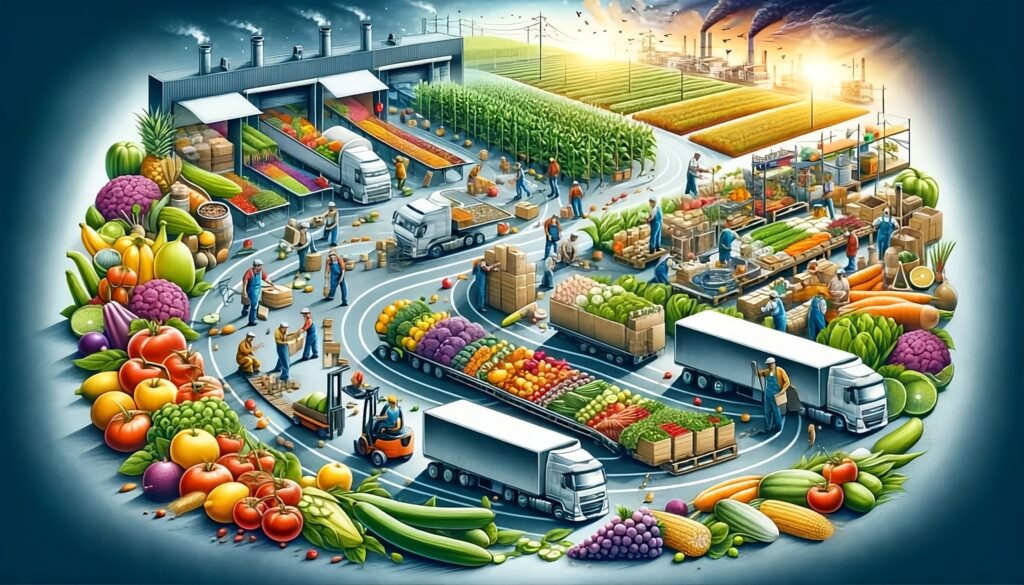
The Black Sea crisis demonstrated that maritime infrastructure is not merely a commercial concern. It is an essential component of the global food system, and access to it can become a subject of diplomatic negotiation. Although routes such as the Suez Canal and the Strait of Malacca remain critical to international commerce, the interruption of Ukrainian agricultural exports showed how the disruption of a specific corridor can have immediate consequences for global food affordability.
Following the invasion, grain accumulated in Ukrainian storage facilities as the security risks surrounding Black Sea ports made normal maritime trade increasingly difficult. Alternative transport routes could absorb some shipments, but they could not immediately replace the scale and efficiency of established maritime exports. The consequences were especially serious for countries already struggling with high import bills, depreciating currencies, and limited fiscal capacity.
The response illustrated both the vulnerability of international trade and its capacity to mitigate crises. In July 2022, Ukraine, Russia, Türkiye, and the United Nations agreed to establish the Black Sea Grain Initiative, creating a framework for the resumption of agricultural exports from designated Ukrainian ports. According to UN Trade and Development (UNCTAD), the initiative had facilitated the movement of more than 23 million tonnes of grain by early March 2023, with exports reaching markets across both developed and developing economies. The initiative subsequently exceeded 32.9 million tonnes of grain by May 2023, demonstrating the importance of restoring access to established trade routes.
The agreement did not eliminate the structural risks facing global food markets, nor did it resolve the conflict that had created them. Its importance lay in demonstrating how diplomatic coordination could restore a portion of the disrupted supply and ease pressure on international markets. It also revealed a difficult reality: when the movement of essential commodities depends on access negotiated under conditions of conflict, the security of food supplies becomes inseparable from geopolitical relationships.
Nevertheless, it would be misleading to interpret every trade dependency as an instrument of coercion. The ability to exert pressure depends on the availability of alternative suppliers, the cost of switching trade routes, the duration of the disruption, and the economic consequences for the exporting country itself. Maritime chokepoints create opportunities for leverage, but their strategic significance ultimately depends on the degree to which other actors can adapt.
Fertilizers and the Hidden Foundations of Agricultural Power
The geopolitics of food does not begin and end with the movement of harvested crops. Beneath the visible trade in wheat, maize, and rice lies another network of dependencies involving the materials required to produce them. Modern agriculture relies heavily on nitrogen, phosphate, and potash fertilizers, alongside reliable access to energy, water, suitable seeds, and functioning agricultural infrastructure. A disruption in any of these inputs can reduce yields, increase production costs, and eventually place additional pressure on food prices.
Fertilizers are particularly important because their effects can extend beyond the immediate disruption. When farmers cannot afford essential inputs, they may reduce application rates or shift to less input-intensive crops. The resulting decline in productivity may not become fully apparent until the following harvest, meaning that a temporary interruption in supply can generate consequences long after the initial market shock has subsided.
Potash provides a particularly clear example of this vulnerability. According to Natural Resources Canada, Canada, Russia, and Belarus together accounted for approximately 70.5 percent of global potash production in 2024. This concentration makes the market sensitive to geopolitical tensions, export restrictions, transport disruptions, and changes in the commercial decisions of major producers. Although other sources and future production projects can reduce this dependence over time, developing new mining capacity requires substantial investment and cannot immediately compensate for a sudden loss of supply.
The strategic implications of this concentration are explored in the 2025 peer-reviewed study The Potash Trilemma: Geopolitics, Market Dynamics, and Global Food Security. The study highlights the unequal position of resource-producing countries, wealthier consumers capable of absorbing price increases, and lower-income importers whose agricultural systems are more exposed to rising costs. The distinction is important because the same market disruption can produce very different outcomes depending on a country’s purchasing power and its ability to secure alternative supplies.
Nitrogen fertilizers reveal a related but distinct dependency. Their production is closely connected to natural gas prices, ammonia manufacturing, industrial capacity, and government export policies. When energy prices rise or production is interrupted, fertilizer costs can increase even in countries geographically distant from the original disruption. Import-dependent agricultural economies may then face a difficult choice between subsidizing farmers, accepting lower input use, or allowing higher production costs to pass through to food prices.
The geopolitical significance of these inputs therefore lies not simply in who possesses mineral reserves or industrial capacity, but in how quickly alternative supplies can be mobilized and who can afford them. A wealthy importing country may withstand a price shock by drawing on financial reserves, negotiating new contracts, or subsidizing domestic agriculture. A poorer country facing the same shock may have far fewer options. In this sense, fertilizer dependence acts as a multiplier of existing economic inequalities rather than as a uniform source of vulnerability.
Food Prices, Social Stability, and the Limits of Economic Resilience
The consequences of food insecurity become most visible when international market disruptions reach household budgets. In lower-income countries, where food can account for a substantial share of household expenditure, even a moderate increase in staple prices may force families to reduce consumption, abandon other essential spending, or rely on informal support networks. The consequences are not distributed evenly: households with limited savings and weak access to social protection are often the first to experience the effects.
History provides several examples of how food-price shocks can intensify political tensions. During the 2007–08 global food crisis, rising prices contributed to protests and episodes of unrest in multiple countries. The World Bank’s Food Price Crisis Observatory documents the relationship between food-price pressures, food insecurity, and episodes of food-related unrest around the world. Such evidence does not establish that rising prices alone cause political instability. Rather, it illustrates how economic shocks can aggravate existing grievances where governments lack the resources or institutional capacity to protect vulnerable populations.
This distinction matters for understanding the relationship between food and political power. A government facing higher import costs may retain stability if it has adequate reserves, credible institutions, effective social assistance, and the ability to secure alternative supplies. Another government facing a comparable shock may experience a much more severe crisis because food subsidies are fiscally unsustainable, public trust is weak, or large sections of the population already face economic insecurity.
Food-price volatility should therefore be understood as a risk multiplier. It increases pressure on societies whose resilience is already limited, but it does not determine political outcomes by itself. The scale of the consequences depends on the interaction between international markets and domestic institutions, including the ability of governments to distribute assistance, maintain access to essential goods, and respond credibly to public demands.
This perspective also explains why food security has increasingly become a strategic concern rather than a purely commercial or humanitarian objective. Governments must consider not only the cost of importing food but also the domestic consequences of losing access to it. The capacity to absorb a supply shock can be as important as the capacity to produce agricultural commodities in the first place.
China and the Strategic Diversification of Food Imports
China offers a useful example of how a major power can manage agricultural dependence without pursuing complete self-sufficiency. As the world’s largest soybean importer, the country relies on international markets to supply a commodity essential to its livestock sector and food-processing industries. Its position illustrates the difference between eliminating dependence and managing it strategically.
Brazil has become a particularly important supplier of Chinese soybean imports, alongside the United States and other producing countries. This relationship reflects differences in agricultural production, export capacity, trade policy, and the evolving commercial links between China and South America. The concentration of Chinese purchases in major exporting countries creates exposure to weather disruptions, logistical bottlenecks, trade disputes, and changes in export policy. At the same time, China’s purchasing power and extensive commercial relationships give it opportunities to negotiate contracts, redirect trade flows, and invest in the infrastructure supporting international agricultural commerce.
For Beijing, the challenge is not necessarily to produce every essential commodity domestically. It is to prevent excessive dependence on any single supplier or route from becoming a critical national vulnerability. Diversifying import sources, maintaining strategic reserves, strengthening transport and storage infrastructure, and supporting overseas commercial partnerships can all contribute to this objective.
Data and analysis from the USDA Economic Research Service and the USDA Foreign Agricultural Service provide useful foundations for examining international soybean trade and China’s changing sourcing patterns. The broader lesson is that agricultural security can be pursued through a combination of domestic production, diversified imports, commercial investment, and diplomatic relationships. The effectiveness of such a strategy depends on whether alternative suppliers can actually deliver the required volumes when disruptions occur, rather than merely appearing as alternatives on paper.
China’s approach also highlights an important limit to the idea of food sovereignty. International trade can create vulnerabilities, but it can also increase resilience by connecting importers to multiple production regions. A diversified trading system may offer greater security than domestic production that depends heavily on a single climate zone, a narrow range of crops, or imported agricultural inputs.
Climate Change and the Emerging Contest for Technological Sovereignty
The strategic landscape is becoming more complicated as climate change places additional pressure on agricultural production. Rising temperatures, shifting rainfall patterns, droughts, floods, soil degradation, and water scarcity threaten the reliability of established growing regions. Because harvest failures can occur simultaneously across interconnected markets, climate-related disruptions may affect several suppliers at once, reducing the effectiveness of diversification when it is most needed.
These pressures are changing the meaning of agricultural power. Productive land and favourable growing conditions remain essential, but they are no longer sufficient on their own to guarantee long-term resilience. Increasingly, agricultural performance depends on access to drought-resistant seeds, precision farming systems, efficient irrigation, advanced storage, reliable energy, and the scientific capacity to adapt crops to changing environmental conditions.
Technological sovereignty is therefore becoming an important dimension of food security. Countries that can develop, adapt, or reliably obtain essential agricultural technologies may be better positioned to protect yields under changing climatic conditions. Those that depend on a narrow range of patented seeds, imported machinery, proprietary digital systems, or externally supplied inputs may face additional risks if commercial relationships deteriorate or access becomes prohibitively expensive.
Yet technological dependence should not be confused automatically with geopolitical subordination. Imported technologies can improve agricultural productivity and resilience, particularly where domestic research and development would be too expensive or slow. The critical question is whether countries have access to a sufficiently diverse range of technologies, the expertise to use them effectively, and the institutional capacity to adapt them to local conditions.
The future of agricultural power will consequently depend on the interaction between physical resources and technological capabilities. Water, fertile soil, and land remain indispensable, but their productive value increasingly depends on infrastructure, scientific knowledge, and the institutions that manage them. States unable to invest in these complementary capabilities may find it increasingly difficult to protect their food supplies against simultaneous market and climate shocks.
Re-engineering the Global Food System for Strategic Resilience
The vulnerabilities exposed by recent crises have prompted a reassessment of the assumptions underlying highly integrated global supply chains. Efficiency and specialization can lower costs under normal conditions, but systems organized around concentrated production, limited inventories, and narrow transport routes may prove fragile when several disruptions occur at once. For governments responsible for feeding large populations, the challenge is to preserve the benefits of international trade while reducing the risks associated with excessive dependence.
Strategic grain reserves, diversified import relationships, resilient port infrastructure, domestic fertilizer capacity, and effective social-protection systems can all contribute to this objective. Their value lies not in guaranteeing complete independence from international markets, but in giving governments more time and more options when supplies are interrupted. The ability to absorb a shock, redirect purchases, protect household purchasing power, and restore production may ultimately matter more than achieving a nominally high level of self-sufficiency.
There are also limits to the pursuit of agricultural autonomy. Domestic production can be expensive, environmentally damaging, or vulnerable to the same climate risks affecting foreign suppliers. Excessive restrictions on agricultural exports may protect domestic consumers in the short term while intensifying scarcity and price volatility elsewhere. Similarly, efforts to stockpile essential commodities can strengthen national resilience but may amplify international market pressure if undertaken simultaneously by many governments during a crisis.
A more sustainable strategy requires coordination between national preparedness and international cooperation. Transparent trade policies, reliable market information, investment in agricultural productivity, and mechanisms for maintaining exports during emergencies can reduce the likelihood that local disruptions develop into global crises. Equally important are domestic institutions capable of ensuring that temporary increases in food prices do not translate into prolonged deprivation for vulnerable populations.
Ultimately, food power is most consequential when it intersects with existing weaknesses. Concentrated production, vulnerable transport corridors, dependence on imported fertilizers, climate volatility, and technological asymmetries can create opportunities for geopolitical leverage. But leverage is not the same as control, and vulnerability is not the same as inevitable collapse. Alternative suppliers, financial resources, strategic reserves, effective governance, and social protection can all limit the ability of an external shock to dictate a country’s political choices.
In an increasingly fragmented international order, national sovereignty will depend not on complete food autarky, but on the capacity to maintain reliable access to essential agricultural inputs, diversify external dependencies, and protect populations from disruptions in global supply networks. The ability to feed a population remains a fundamental responsibility of the state. The strategic challenge is to fulfil that responsibility without assuming that independence from the world is either achievable or desirable.
Explore More on Geopolitics
Food security is increasingly connected to the control of strategic technologies, critical resources, and global supply chains. Explore how these dynamics extend beyond agriculture in our related analyses:
- The Dangerous Geopolitics of Semiconductors: Inside the Global Power Struggle — Discover how semiconductor supply chains, technological bottlenecks, and the race for AI dominance are reshaping global power.
- Nuclear Energy Geopolitics: The Critical Global Race for Power, Security and Industrial Sovereignty — Explore how nuclear technologies, uranium supply chains, and energy security are influencing industrial sovereignty and international competition.