
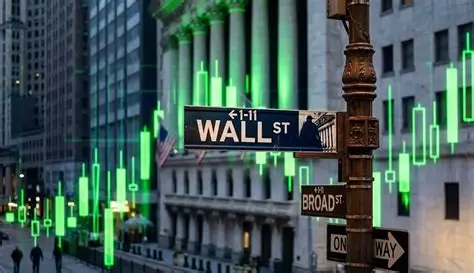
Wall Street Holds Near Record Highs, but Caution Signals Are Quietly Rising Across the U.S. Market
New York, 17 August 2026 — By Julian Reyes
Wall Street started the new week in a kind of uneasy balance. The major U.S. indexes are still hovering close to their record highs, but underneath the surface there’s a growing sense that the market isn’t as solid as it looks. The S&P 500, which closed at a fresh all‑time high of 7,798.99 on August 13, is still trading not far from that level today, while the Nasdaq keeps finding support from the tech sector.
Today’s session shows a pretty sharp divergence between sectors. The S&P 500 is down around 0.2%, the Dow is slipping a bit more, and the Nasdaq is the only one holding green territory. Tech is doing most of the heavy lifting again, especially semiconductors and companies tied to artificial intelligence. The Information Technology sector of the S&P 500 is up roughly 0.5%, which is helping limit broader losses.
One of the most surprising movers is SanDisk, which is having a strong rally and is now up about 35% over the past week. Micron, Marvell, Western Digital and other memory‑related names are also benefiting from renewed enthusiasm around AI infrastructure. Nvidia is rising too, but more cautiously, with investors waiting for its next earnings report.
AI remains one of the main engines of Wall Street right now. Expectations for growth in the sector continue to support valuations, but the market is becoming more selective. Investors aren’t just asking how fast AI spending will grow — they’re asking how quickly that spending will turn into real revenue and real profits. That’s a different kind of pressure.
On the macro side, the signals are mixed. Recent data showed a slowdown in U.S. consumer activity, with July retail sales coming in weaker than expected. That helped reduce expectations of a restrictive move by the Federal Reserve in September. Market‑tracked probabilities now show about a 31% chance of a rate change at the next meeting, down from roughly 55% a week ago.
Lower rate expectations should, in theory, support equities. But the bond market is sending a less comforting message. The 30‑year Treasury yield has climbed to 5.29%, the highest level since 2007. The 10‑year is holding near 4.7%. Yields this high raise the cost of capital and make expensive stocks look… well, even more expensive. That’s especially true for companies with stretched multiples.
Oil is complicating things further. Tensions between the United States and Iran are back in focus, with investors worried about security in the Strait of Hormuz. Brent crude has moved up toward $89 a barrel, increasing the risk that higher energy prices could reignite inflation pressures.
So the paradox of Wall Street right now is pretty clear: corporate earnings and the AI boom are keeping indexes strong, but bonds, oil and geopolitics are creating an environment where investors have less room for mistakes.
The next round of earnings will be important. This week brings results from major retailers like Walmart, Home Depot, Target and Lowe’s. Their numbers could offer a clearer picture of the health of the American consumer, especially after the recent slowdown in retail sales.
For investors, the key question isn’t just whether Wall Street can keep hitting new records. The real issue is whether earnings growth can justify current valuations while Treasury yields stay high and geopolitical risks increase.
The U.S. market remains structurally strong, but this phase demands more selectivity. As long as earnings keep surprising to the upside and the Federal Reserve maintains a less restrictive stance, the bullish trend can hold. But a spike in oil, another jump in Treasury yields, or clearer signs of consumer weakness could turn caution into volatility very quickly.
