Sally the Robot and the Future of Artificial Intelligence in Schools
Written by Zemeghub Media Creation
When the students at Midtown Tech Charter in New York City were told they would help design a classroom robot, they didn’t imagine they were stepping into one of the most controversial education experiments of 2026. The robot had a name — Sally — and a personality: upbeat, curious, and modeled as a young female with dark hair and expressive eyes. She was meant to be a new kind of educational assistant, a bridge between human learning and artificial intelligence. But just weeks before her debut, the project was abruptly shut down.
The cancellation didn’t happen quietly. It came after a wave of outrage from parents, educators, and privacy advocates who argued that Sally represented a dangerous step toward the normalization of AI surveillance in schools. The debate surrounding her arrival — and sudden disappearance — reveals how deeply divided society has become over the role of artificial intelligence in childhood education.
To understand why Sally became a flashpoint, it’s necessary to look at the broader context. In 2026, AI systems are advancing at unprecedented speed. As we explored in Artificial Intelligence in 2026: Why the World Is Racing to Control the Most Powerful Technology Ever Created, the global competition over AI has pushed companies and governments to deploy intelligent systems in every possible domain — including schools. The promise is seductive: personalized learning, real‑time feedback, adaptive tutoring, and support for teachers overwhelmed by growing class sizes.
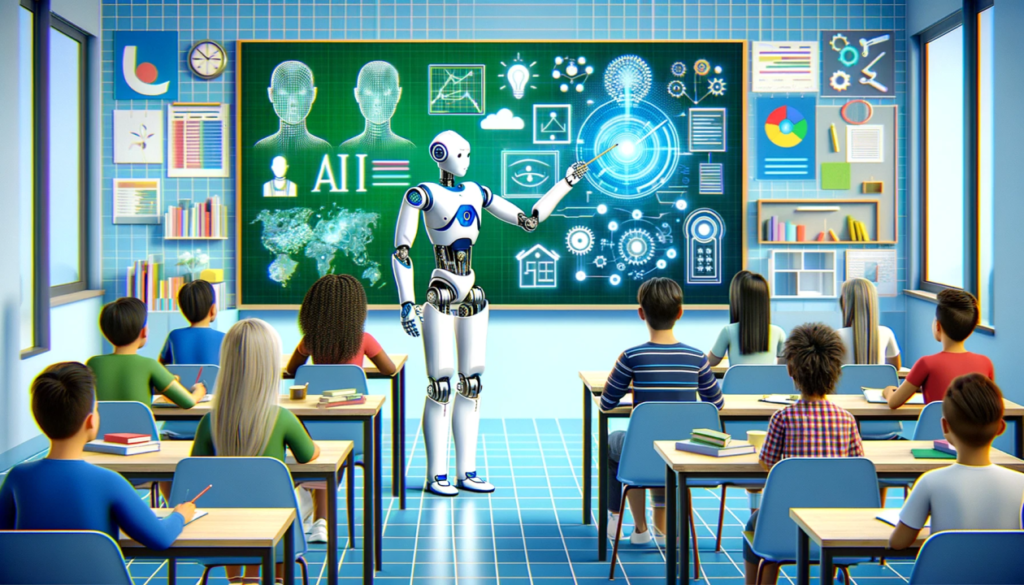
Sally was designed to embody that promise. Built by a New York robotics startup, she was equipped with multimodal perception, allowing her to interpret speech, facial expressions, and gestures. Her AI core was powered by a lightweight educational model derived from GPT‑5‑series architectures, optimized for classroom interaction. According to internal documents reviewed by Zemeghub, Sally could:
- answer student questions
- explain math and science concepts
- detect confusion or frustration
- suggest personalized exercises
- assist teachers with grading and lesson planning
She wasn’t meant to replace teachers. She was meant to augment them.
But the moment Sally’s promotional video was released — showing her interacting with students, smiling, and responding with human‑like warmth — the backlash began.
Parents questioned why the robot had been given a young female persona. Some argued it reinforced gender stereotypes, portraying women as assistants rather than leaders. Others worried that children would form emotional attachments to a machine designed to mimic empathy. Privacy advocates raised alarms about Sally’s sensors, which collected behavioral data to improve her responses. Even though the school insisted the data would remain local and encrypted, critics argued that no AI system in a classroom could ever be fully safe from misuse.
The controversy escalated when a leaked memo revealed that Sally’s software included “engagement scoring,” a metric that tracked how attentive each student was during lessons. The school claimed the feature was experimental and would help teachers identify students who needed support. But to many parents, it sounded like a surveillance tool disguised as pedagogy.
Within days, the story spread across New York media. Education unions demanded an investigation. Civil liberties groups issued statements warning that Sally represented “the first step toward algorithmic monitoring of children.” The startup behind Sally insisted the robot was harmless and that the outrage was fueled by misunderstanding. But the damage was done.
On June 14, 2026, the school board voted to suspend the project indefinitely.
For the students who helped design Sally, the cancellation felt like a betrayal. They had spent months choosing her appearance, shaping her personality, and testing her responses. Some saw her as a creative achievement — a symbol of what young people could build when given access to advanced tools. Others felt she represented a future in which technology and education could coexist in harmony.
But the adults saw something different: a line that should not be crossed.
The Sally incident reflects a growing tension in American schools. According to a 2026 report from the National Education Technology Council, 42 percent of U.S. schools now use some form of AI‑assisted learning, from automated tutoring systems to predictive analytics that identify students at risk of falling behind. Yet the same report found that 68 percent of parents distrust AI tools in classrooms, citing concerns about privacy, bias, and emotional manipulation.
The divide is widening. On one side are educators and technologists who believe AI can democratize learning, offering personalized support that human teachers cannot always provide. On the other side are families and advocates who fear that AI will reshape childhood in ways society is not prepared to handle.
Sally became the symbol of that conflict — not because she was dangerous, but because she was too human. Her design blurred the line between machine and companion, raising questions that the school was not ready to answer.
What does it mean for a child to learn from a robot that smiles? Who controls the data collected by an AI tutor? Should machines be allowed to interpret emotions in a classroom? And most importantly: Where is the boundary between assistance and intrusion?
For now, Sally remains in storage at the robotics lab, her debut postponed indefinitely. But her story is far from over. As AI continues to evolve, schools across the United States — and the world — will face the same questions that Midtown Tech confronted. The future of education will not be shaped only by technology, but by the choices society makes about how far it is willing to let machines into the lives of children.
Sally was meant to be a beginning. Instead, she became a warning.