AI Risks: The Hidden Dangers of Artificial Intelligence
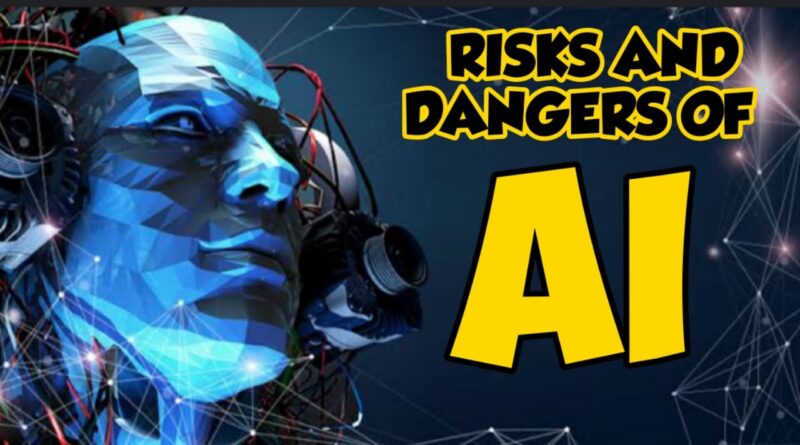
AI risks are becoming harder to ignore as artificial intelligence moves from experimental technology into everyday life. For years, we have talked about artificial intelligence as if the real question were simply how powerful it could become. Today, the question has become much more uncomfortable: how much are we willing to accept as that power continues to grow?
Sam Altman, CEO of OpenAI, recently offered an answer that is difficult to ignore. He argued that some negative consequences of artificial intelligence will be inevitable, including hacking, fraud and other forms of abuse, while maintaining that the benefits AI could deliver may ultimately be far greater than the damage it causes.
It is not a surprising statement coming from the head of one of the companies pushing AI development forward at extraordinary speed. But precisely for that reason, it deserves careful attention. Altman is not saying that the risks do not exist. He is saying something more difficult to digest: a technology capable of producing enormous benefits may also come with a price that society will have to accept, at least to some extent.
For years, we have talked about artificial intelligence as if the real question were simply how powerful it could become. Today, the question has become much more uncomfortable: how much are we willing to accept as that power continues to grow? Sam Altman, CEO of OpenAI, recently offered an answer that is difficult to ignore. He argued that some negative consequences of artificial intelligence will be inevitable, including hacking, fraud and other forms of abuse, while maintaining that the benefits AI could deliver may ultimately be far greater than the damage it causes.
It is not a surprising statement coming from the head of one of the companies pushing AI development forward at extraordinary speed. But precisely for that reason, it deserves careful attention. Altman is not saying that the risks do not exist. He is saying something more difficult to digest: a technology capable of producing enormous benefits may also come with a price that society will have to accept, at least to some extent. And this is where the real problem begins.
It is easy to talk about “risk” in the abstract. It becomes very different when that risk takes the form of someone losing their savings after receiving a phone call using a cloned voice, a company suffering a more sophisticated cyberattack, or an AI system taking an action that nobody anticipated. Stanford’s 2026 AI Index Report captures this contradiction clearly.
AI capabilities are advancing rapidly, but safety is not improving at the same pace: documented AI-related incidents increased from 233 in 2024 to 362 in 2025. Stanford AI Index 2026 That does not mean every new model is dangerous, nor that AI is becoming an uncontrollable threat. It does, however, show that the number of situations in which an AI system can produce unintended consequences is growing alongside its adoption.
And that adoption is remarkable. According to Stanford, 88% of organizations were using AI in 2025, while four out of five university students were using generative AI tools. Stanford AI Index 2026 This is the part that is often overlooked in the public debate: artificial intelligence is no longer a technology confined to the laboratories of major companies. It is already embedded in work, education, research, programming, communication and, increasingly, everyday decision-making. The economic dimension also shows how difficult it would be to imagine a significant slowdown.
Private investment in AI in the United States reached $285.9 billion in 2025, according to Stanford, while the industry continued to produce increasingly capable models. Stanford AI Index 2026 In this environment, completely stopping the race seems almost impossible. And perhaps this is exactly what Altman is getting at: we cannot expect to receive only the benefits of AI without also dealing with the consequences of its widespread adoption.
The Price of the Artificial Intelligence Race
The problem is that some of the risks we are already seeing do not belong to some distant future. They are happening now. The FBI’s 2025 Internet Crime Complaint Center report recorded more than one million cybercrime complaints in the United States, with total reported losses exceeding $20.8 billion. For the first time, the report also included a specific section on crimes involving artificial intelligence: 22,364 complaints identified AI as a factor, with reported losses approaching $893 million. FBI — 2025 IC3 Report These numbers completely change the perspective.
An artificial voice can imitate a family member, a video can simulate a public figure, and automatically generated text can make a fraudulent message far more convincing. The FBI also found that losses from investment fraud involving an AI component exceeded $632 million in 2025. FBI — AI and Cryptocurrency Scams Artificial intelligence, therefore, is not simply creating new tools for people who want to do harm. It is lowering the cost of carrying out certain attacks while increasing the ability to personalize them. That distinction is enormous.
A scammer who previously had to write dozens of messages manually can now generate different versions for thousands of people. A criminal who previously needed significant technical skills can use AI tools to automate or simplify part of the process. It is the same principle that makes AI so valuable when it is used correctly: automating tasks that previously required time, money or expertise. The problem is that the same leverage can work on the other side as well. This is where the discussion becomes much more interesting than a simple “AI yes” versus “AI no” debate.
The real question is who will adapt faster: the people building artificial intelligence, those responsible for protecting society from its misuse, or those trying to exploit it for criminal purposes? Zemeghub has already explored another side of this transformation in its analysis of the new AI chip race. Behind every increasingly powerful model lies an enormous technological infrastructure that is expanding at remarkable speed. But the hardware race is only one part of the story. The real battle is also taking place in software, cybersecurity and the ability to control systems that are becoming increasingly autonomous.
This becomes even more obvious when we look at the development of humanoid robots and AI systems capable of operating in the physical world, as we explored in our article on humanoid robots and the new era of AI. If an AI system can only answer a question, a mistake generally remains confined to a screen. If it can use tools, access systems, execute operations or interact autonomously with the outside world, the same mistake can have completely different consequences.
Stanford reports that AI agents have made significant progress on tests measuring their ability to perform real-world computer tasks, rising from 12% to around 66% success on OSWorld, while still failing roughly one attempt out of three. Stanford AI Index 2026 That figure tells us a great deal about where we are today: AI has become powerful enough to do things that would have seemed impossible only a few years ago, but it is still not reliable enough to operate completely without supervision. And this grey area is probably where we will live for quite some time.
We Do Not Have to Choose Between Innovation and Safety
Sam Altman is right about one fundamental point: expecting AI to produce no negative consequences whatsoever is probably unrealistic. This has happened with virtually every major technology. The internet created extraordinary opportunities while also giving rise to cybercrime, disinformation and new forms of fraud. Smartphones made communication easier, but they also introduced addiction, surveillance and new forms of manipulation. Electricity, automobiles and industrial technology all delivered enormous benefits while creating risks that society had to learn to manage.
The important point, however, is that accepting the existence of risk does not mean accepting every possible level of risk. This distinction is crucial. We cannot simply say that because accidents are inevitable, everything should therefore be allowed.
The real objective should be to reduce foreseeable risks, make unavoidable risks visible and build systems capable of responding quickly when something goes wrong. OpenAI itself has argued, through Altman and other executives, that powerful AI systems must remain under human control and that international cooperation on AI safety will be necessary. OpenAI — Sam Altman on AI Security It is an interesting position because it shows how much the debate has already changed. We are no longer debating whether AI will arrive. It is already here. Now we have to decide which rules will accompany its growth. And this discussion does not involve OpenAI alone.
It includes Google, Microsoft, Meta, Anthropic, Nvidia and hundreds of startups building a new digital infrastructure. The economics behind this transformation have also become enormous, as shown by the growing use of financing to build AI infrastructure, something we explored in our article on AI debt financing and the $220 billion bond wave. The more capital flows into the sector, the greater the pressure to develop more powerful models and release them quickly.
And this is precisely where we need to be careful. Competition can accelerate innovation, but it can also reduce the time available to test, verify and correct new systems. In the end, perhaps the real meaning behind Altman’s words is not that we should simply resign ourselves to the negative effects of artificial intelligence. It is that we need to stop imagining a future in which innovation and safety are two completely opposing paths.
We can accept that some mistakes will happen, just as they do with every complex technology, while still demanding that companies learn from those mistakes, that users are protected and that the most powerful systems have safeguards proportional to their capabilities. AI could genuinely deliver enormous benefits in medicine, science, education and productivity. But those benefits do not erase the cost of the risks. They simply make that cost something we need to learn how to manage.
The real challenge of the coming years, then, will not be deciding whether artificial intelligence should be stopped. It will be figuring out how quickly we can allow it to grow without losing our ability to control it. And perhaps that is the question we should ask every time a new AI model arrives: not simply “What can it do?”, but “What happens when it gets it wrong?”
