The Death of the Open Web: How AI Is Reshaping the Future of Knowledge
The Death of the Open Web is no longer a distant possibility discussed only by technology analysts and digital publishers. It is an ongoing transformation that is reshaping how knowledge is created, distributed, discovered, and monetized across the internet. As artificial intelligence increasingly becomes the primary interface between users and information, the traditional relationship between publishers, search engines, and readers is being fundamentally redefined.
The Great Feudalization: The Death of the Open Web and the Democratic Prairie
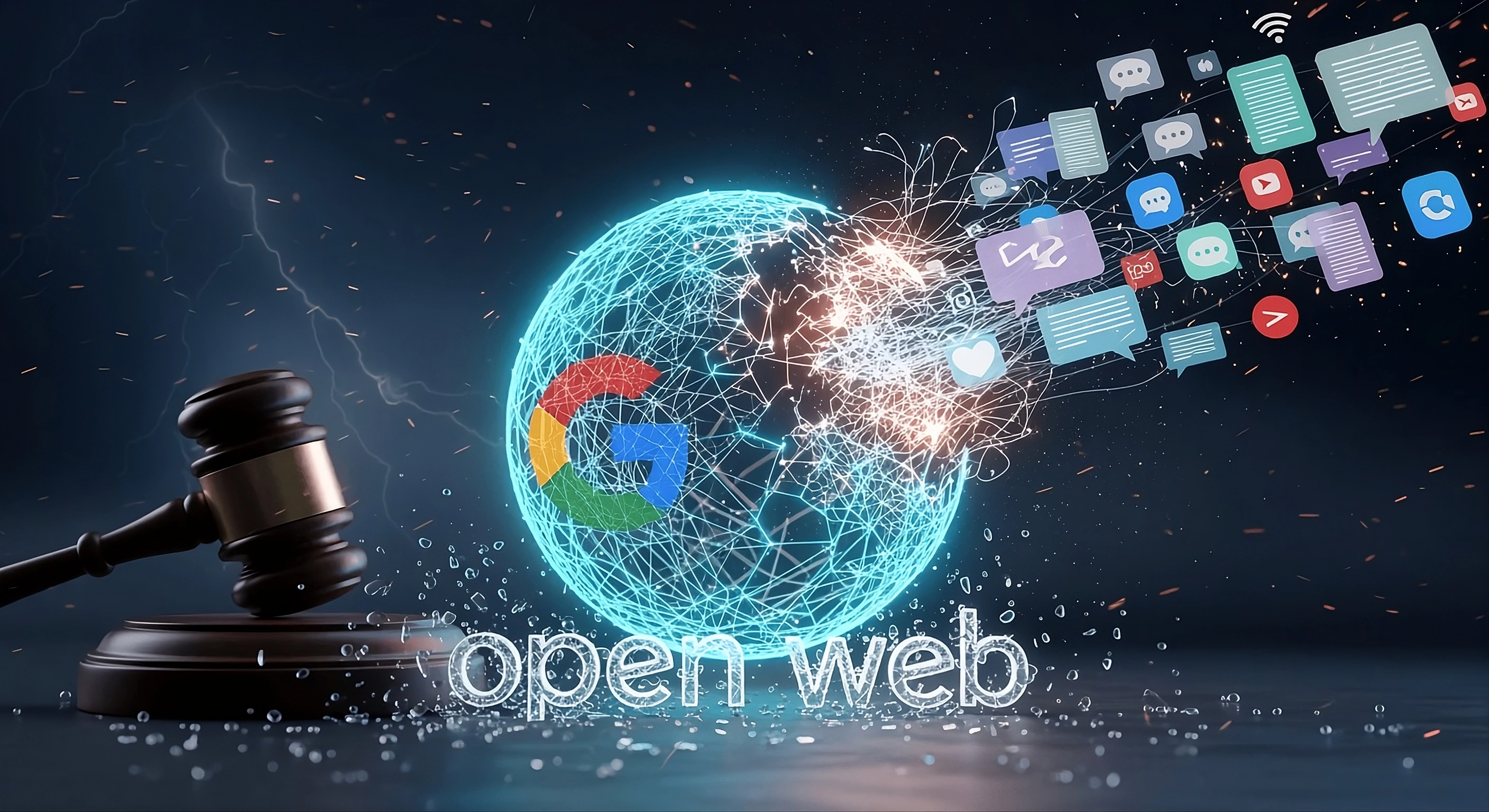
Internet, as we have known and navigated it for the past thirty years, is disappearing before our very eyes. The era of the Open Web — that vast, chaotic, yet fundamentally democratic prairie where any individual could launch a blog, share a distinct passion, be discovered on global search engines, and monetize their own intellectual labor — has officially reached its end.
We are not merely witnessing a standard technological upgrade or a benign shift in digital consumer habits. We are living through a massive geopolitical corporate enclosure of human attention. While the wealth, culture, and resilience of the traditional network were built entirely on decentralization and distributed traffic, today we are witnessing the aggressive consolidation of a feudal digital oligopoly.
A tightly knit circle of Silicon Valley conglomerates is actively fencing off the sum of human knowledge through Generative Artificial Intelligence, systematically turning the traditional “search engine” into a centralized “answer engine.” In this ruthless economic transition, the global middle class of content creators, independent journalists, specialized copywriters, and niche publishers is being systematically bypassed, structurally defunded, and stripped of its raw digital assets.
The Core Short Circuit: The Parasitic Exploitation of Human Knowledge
The underlying economic engine powering modern large language models and conversational search systems — such as ChatGPT, Gemini, Copilot, and Perplexity — relies on a profound, unprecedented ethical and intellectual short circuit. These platforms do not possess consciousness, nor do they generate original knowledge or investigative facts out of thin air. They survive by constantly scraping, reading, parsing, and digesting deeply analytical texts written with painstaking effort, time, and human passion by independent authors.
However, when a modern internet user inputs a complex query — attempting to comprehend the structural why behind an international energy crisis or the precise how of a groundbreaking neurological study —, the Generative AI engine extracts the factual core and stylistic nuance from independent platforms, synthesizing a native, comprehensive three-line answer. It purposefully presents this output on its own proprietary interface, effectively trapping the user within its digital walls.
The immediate consequence for the publishing industry is catastrophic. The user receives the perfect answer in seconds, absorbs the information, thanks the machine, and shuts down the application. The AI engine absorbs the total credit, retains the domestic traffic, and captures the user’s gratitude. Meanwhile, the original human creator who funded the research and wrote the synthesis is left with zero page views, zero ad impressions, and zero commercial recognition. The open public web has been converted into a parasitic hunting ground, where structural algorithmic efficiency deliberately crushes the economic value of human intellectual property.
Information Density: Macro Metrics of the Digital Crisis (2025-2026)
The destruction of the open web is no longer a speculative warning or a distant future scenario. It is a highly measurable economic reality supported by structural industry data compiled over the recent months:
- The Collapse of Outbound Traffic: According to data published by the Reuters Institute for the Study of Journalism, aggregate organic traffic routed from traditional search engines to global content websites will suffer a structural contraction of over 40% within the next three years. Prominent digital technology publications have already suffered immediate vertical drops in standard SEO traffic reaching up to 85% following the international deployment of native generative zero-click responses (AI Overviews).
- The Total Evaporation of Ad Revenue: The physical erasure of the traditional Search Engine Results Page (SERP) has permanently shattered the legacy business model of automated display advertising networks (such as Google AdSense). The average Click-Through Rate (CTR) on generic contextual banners has systematically plunged below the 0.1% threshold, totally erasing the primary revenue streams that previously allowed small and medium independent platforms to cover high hosting and operational costs.
- The Monopoly of the Corporate Elite: The distribution of conversational citations is starkly polarized. Industry audits reveal that an extreme oligopoly of just 15 mega-domains (led by Wikipedia, Reddit, and massive news infrastructures like Bloomberg and Reuters) captures over 68% of the total citation share across all major generative models. This leaves the remaining millions of independent websites to wage a desperate war over a fragmented, dwindling 32% residual citation share.
The Structural Anatomy of the Internet Shift
| Strategic Metric | The Legacy Open Web (SEO Era) | The Synthetic Internet (GEO Era) |
|---|---|---|
| Primary Interface | Multitudes of hyperlinked domains, manual browsing | Conversational chatbots, text inputs, voice assistants |
| Audience Engagement | Active inquiry, synthesis of multiple distinct sources | Passive absorption of a single algorithmic summary |
| Capital Allocation | Distributed programmatic ad spends across millions of blogs | Consolidated corporate investment within AI cloud infrastructures |
| Independent Viability | Scalable through high search volumes and display ads | Strictly dependent on niche B2B sponsorships and private email pipelines |
| Crawler Access Control | Universal indexation encouraged for competitive visibility |
Severe defensive implementation of crawler blocks (robots.txt)
|
The Creator’s Nuclear Paradox: The Trap of Generative Optimization
Confronted by this aggressive algorithmic enclosure, independent publishers are currently paralyzed by a terrifying economic double-bind. It is a true nuclear paradox of digital survival: if an author completely locks their writing behind a rigid paywall or a closed community to prevent unauthorized AI scraping, they immediately die of digital invisibility; if they leave their work out in the open web to rank within the new Conversational AI indexes, they actively feed the very machines that are cannibalizing their traffic.
Under the legacy rule of classical search engines, the unwritten social contract of the internet was clear: the publisher invested resources to generate valuable content, the search engine indexed and ranked it via clear mathematical rules, and the human user clicked the link, traveling to the origin domain. That physical arrival on the webpage was the financial lifeblood of the open web. It triggered programmatic advertisements, fueled affiliate links, and justified the creator’s existence.
The generative shift has unilaterally broken this contract. Because conversational platforms provide the final information directly to the consumer, the transition to GEO (Generative Engine Optimization) fundamentally destroys click-through conversion rates.
Even when a conversational search system acts “fairly” and includes a small hyperlinked citation tag, the percentage of users who will manually scroll down, locate the reference, and leave the AI chat interface to load an external site is a miniscule fraction of past metrics. GEO is a valuable defensive tool to prove authority, but it is not a direct replacement for the massive ad revenues that once kept the middle class of the internet alive. The tech sector has monopolized the human expression of thirty years of public networking, locked it within subscription-based proprietary software, and left independent creators to starve on the crumbs of invisible hyperlinks.
The Corporate Dilemma: Why the Giants Choose Cannibalization
This structural decay raises a vital geopolitical question: Why is a superpower like Google actively choosing to destroy the open web — the very ecosystem that granted it unmatched global wealth and monopoly power — instead of building an alternative that keeps web traffic alive? The answer lies in systemic competitive terror and the fatal “Kodak Syndrome.”
Google’s rapid pivot toward zero-click generative search was not a calculated, peaceful evolution; it was a desperate defensive maneuver provoked by OpenAI’s rapid monetization of conversational intelligence. When conversational search became a viable commercial threat, Google faced a stark existential crossroads. Had it chosen to freeze its technological development in order to protect the economic structures of traditional publishers, it would have faced a mass exodus of its core user base toward alternative AI systems. Google deliberately chose to cannibalize its own highly lucrative ad-search traffic rather than allowing rival corporate empires to claim total dominance over human intent.
Simultaneously, Big Tech is capitalizing on a fundamental mutation in human psychology: the absolute worship of convenience. Modern web consumers, exhausted by a fragmented internet plagued by aggressive cookie consent pop-ups, slow javascript loads, and intrusive ad layouts, gladly embrace the clinical simplicity of a single automated paragraph. Tech companies are merely accelerating this demand for absolute frictionless immediacy to remain the absolute gatekeepers of knowledge, fully aware that they are permanently draining the financial pipelines of the open web.
The Ultimate Prophecy: The Death of Biodiversity and the Algorithmic Collapse
However, this corporate architecture conceals a massive, self-destructive blind spot. It is a systemic flaw that exposes the entire artificial intelligence landscape to an inevitable structural collapse. Google and the major AI networks are actively sawing off the massive intellectual branch upon which their entire empire sits.
A healthy, resilient intellectual ecosystem requires absolute digital biodiversity. The web grew beautiful, unpredictable, and profoundly useful because it was populated by millions of highly diverse organisms: small local blogs, obsessive technical hobbyists, eccentric independent scientists, and radical creative writers who injected unique cultural perspectives, human irony, empirical real-world studies, and brilliant, unexpected creative errors into the public record.
If over the next decade tens of thousands of these small publishers turn off their servers because they can no longer monetize their work, the open web will transform into a sterile, concrete digital desert. The generation of fresh, real-world data will contract into an extreme corporate monopoly of a few legacy gatekeepers.
When that happens, the conversational engines will run out of fresh human “food.” To continue training their models, the AI networks will be forced to scrape an internet increasingly flooded with text generated by other artificial intelligences. The machines will begin to consume the waste of the machines.
Computer scientists have already mathematically proven the terrifying results of this phenomenon, known as Model Collapse. When an intelligence engine is continuously trained on synthetic, machine-made data rather than fresh, chaotic, authentic human output, its cognitive capability rapidly decays. The system starts to repeat the exact same sterile concepts in an endless, degrading feedback loop. It loses systemic depth, suffers wild systemic hallucinations, fabricates nonsensical correlations, and completely flattens language.
The final internet will become a completely automated, hollow highway, entirely devoid of soul, surprise, or beauty. By starving the independent publisher, Google is poisoning its own well. When every automated answer becomes a predictable, standardized, diplomatic summary of an algorithm reading itself, the human value of searching will evaporate entirely.
The empire will collapse not from a lack of computing power, but from an absolute bankruptcy of meaning. The future of the digital world no longer belongs to those who chase the dying metrics of the open web, but to those who will actively build closed, human-centric sanctuaries protected from the vacuum of the machine.
Related Geopolitical Analysis
The struggle over artificial intelligence is no longer merely a technological or economic issue. It is rapidly becoming a geopolitical battle over information control, digital sovereignty, strategic infrastructure, and the future production of human knowledge.
For a broader understanding of how systemic pressures are reshaping the world, explore these in-depth analyses from the Zemeghub Editorial Team:
- The Dangerous Geopolitics of Semiconductors: Inside the Global Power Struggle
- Food Geopolitics: Supply Chains and National Security
- Global Crisis of Trust: The Alarming Reason Protests Are Spreading Across the World
Discover more investigations in our Geopolitics section.