
Global Crisis of Trust: The Alarming Reason Protests Are Spreading Across the World
Global Crisis of Trust may be one of the most important political stories of our time. From Tirana to Paris, images of demonstrations, strikes, and public unrest are becoming increasingly common. While the immediate causes differ from country to country, these movements raise a larger question: are we witnessing isolated political disputes, or the emergence of a global crisis of confidence in the institutions that shape modern society?
The images arrive from different corners of the world, yet they seem to tell the same story. In Tirana, demonstrators gather in the streets demanding accountability and political change. In Paris, students and workers march to defend education, public services, and social protections. Thousands of miles apart, shaped by different cultures and political traditions, these movements appear disconnected at first glance. Yet as similar scenes emerge across multiple countries, a larger question begins to take shape. Are these merely local disputes unfolding at the same time, or are they symptoms of a deeper transformation affecting societies across the globe?
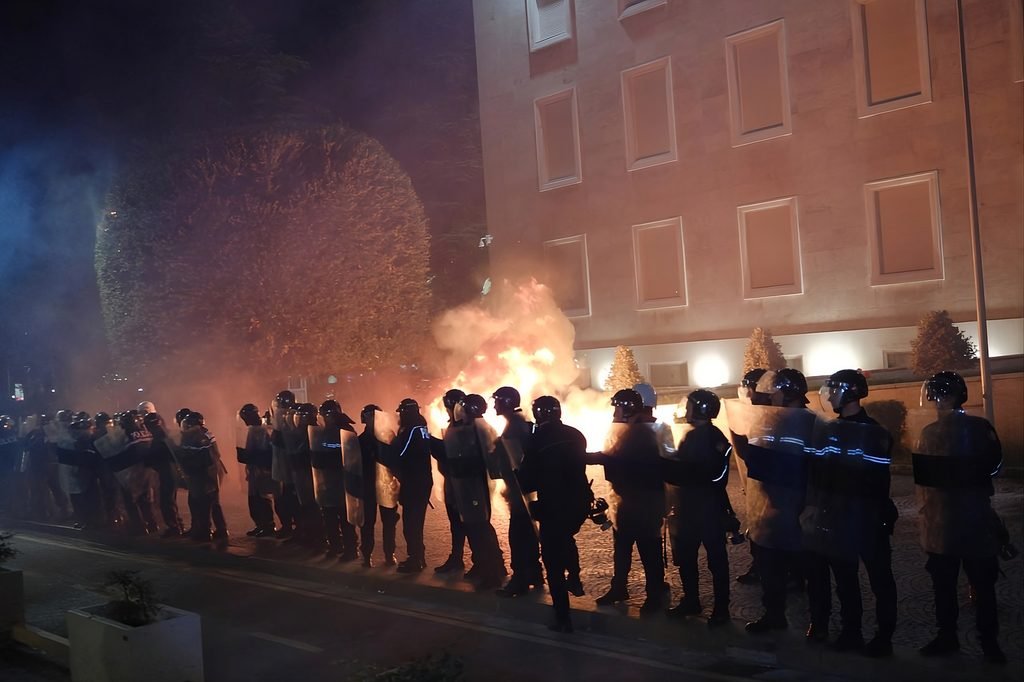
How the Global Crisis of Trust Is Shaping Modern Societies
Looking beyond the headlines, it becomes clear that the protests themselves are not the most important story. The demonstrations are only the visible expression of forces that have been building beneath the surface for years. The true story is about confidence. More precisely, it is about what happens when large portions of society begin to lose confidence in the institutions that were designed to provide stability, opportunity, and progress.
For decades, modern societies were built around a relatively straightforward promise. If people worked hard, acquired an education, respected the rules, and contributed to society, they could expect a better future for themselves and their children. That promise formed the foundation of social cohesion in many countries. Today, however, increasing numbers of people feel that the contract is no longer functioning as it once did.
The reasons are complex, but economic pressure sits at the center of the growing unease. Across developed and developing nations alike, the cost of living has risen dramatically. Housing has become less affordable, energy prices remain a burden for many households, education is increasingly expensive, and daily expenses consume a larger share of family incomes. Governments may point to economic growth, employment figures, and positive macroeconomic indicators, yet many citizens judge the economy not through statistics but through their own experiences. When people struggle to pay rent, purchase a home, save money, or achieve financial security, official narratives lose much of their persuasive power.
The problem extends beyond economics because economics shapes expectations. What is often overlooked is that frustration does not arise solely from hardship. It emerges when there is a growing gap between expectations and reality. People can tolerate difficulties when they believe those difficulties are temporary and that opportunities remain available. They become far less patient when they begin to doubt that their efforts will ever lead to meaningful improvement.
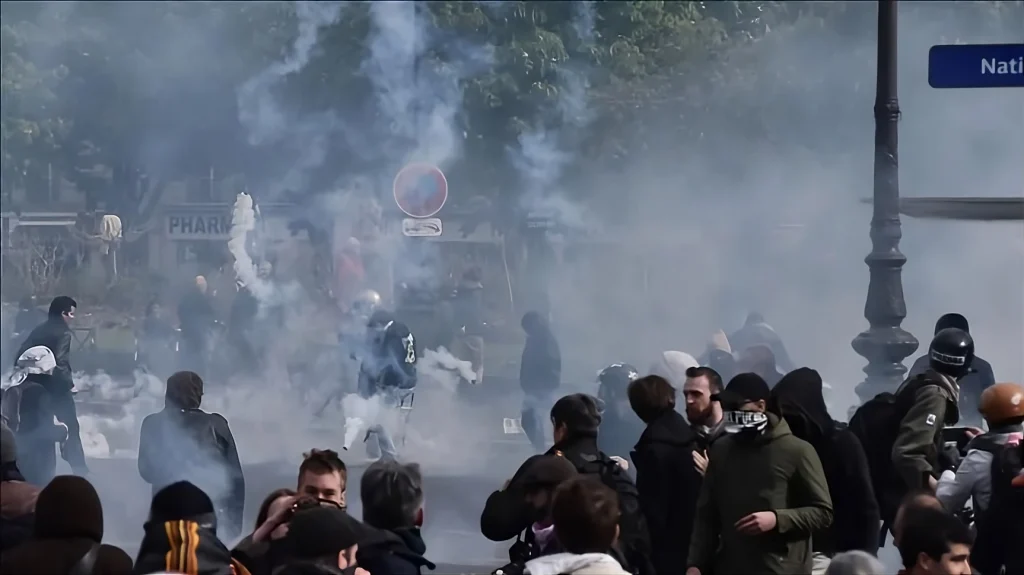
This tension is particularly visible among younger generations. For many young people, the traditional pathways toward social mobility appear increasingly uncertain. University degrees no longer guarantee stable careers. Full-time employment no longer guarantees access to affordable housing. The idea that each generation will enjoy a better quality of life than the previous one is no longer taken for granted. Instead, many young adults face a future that appears more expensive, more competitive, and less predictable than the one their parents experienced.
As a result, educational disputes often evolve into something much larger than debates about schools or universities. Behind demands for better educational funding frequently lies a deeper anxiety about opportunity itself. Young people are not simply questioning classroom conditions. They are questioning whether the systems around them are still capable of delivering the future they were promised.
At the same time, trust in institutions has been steadily eroding. Governments, political parties, public administrations, traditional media organizations, and even international institutions face growing skepticism from the citizens they serve. Trust does not require complete agreement. Democracies have always functioned through disagreement. What trust requires is a belief that institutions are capable of listening, adapting, correcting mistakes, and responding to legitimate concerns. When that belief weakens, political disagreements become more confrontational and public frustration becomes more difficult to contain.
This is where the protests in different countries begin to reveal their shared significance. The specific grievances may vary, but the underlying sentiment often sounds remarkably similar. People increasingly question whether those in positions of power understand their concerns, whether existing policies serve ordinary citizens, and whether established systems remain capable of addressing contemporary challenges.
The digital era has amplified these developments in unprecedented ways. A protest that begins in one city can become global news within minutes. Images circulate across continents almost instantly. Videos of demonstrations, clashes, and police responses are viewed by millions who may know little about the local context yet immediately recognize familiar frustrations. In this way, local grievances acquire global visibility.
However, global visibility should not be confused with global coordination. The people protesting in Tirana are not necessarily fighting for the same objectives as those marching in Paris. The causes behind demonstrations in one country may be entirely different from those in another. Corruption allegations, economic inequality, housing shortages, educational reforms, democratic rights, political accountability, and social welfare concerns all generate their own forms of activism. Similar images do not necessarily represent identical motivations.
Yet the recurrence of these tensions across numerous societies cannot be ignored. Economic insecurity, declining institutional trust, generational anxiety, and political polarization have become common features of public debate in many regions of the world. Different countries are arriving at similar concerns through different historical and political paths.
This is why describing the current situation as a single global crisis would be misleading. What we are witnessing is not one unified revolt against a common enemy. It is something more nuanced and perhaps more significant. We are witnessing a convergence of pressures. Separate societies facing different challenges are nevertheless encountering similar questions about opportunity, fairness, governance, and representation.
The years following the pandemic accelerated many of these trends. Economic disruption, inflationary pressures, geopolitical uncertainty, rapid technological change, migration debates, and shifting labor markets have combined to create an environment in which many citizens feel less secure about the future than they did only a decade ago. Existing tensions that once remained manageable have become more visible and more difficult to ignore.
Whether these pressures ultimately lead to instability, reform, or renewal depends largely on how governments and institutions respond. History shows that protests themselves do not determine outcomes. What matters is whether political systems are capable of transforming public dissatisfaction into constructive change. When institutions engage with grievances, pursue credible reforms, and maintain open dialogue, periods of unrest can strengthen democratic resilience. When concerns are dismissed or ignored, divisions often deepen and distrust becomes harder to reverse.
Ultimately, the most important question is not whether demonstrations will continue. Public protest has always been part of human society and will remain so. The more significant question is whether political institutions can bridge the widening gap between what citizens expect and what governments are able, or willing, to provide.
The scenes unfolding in Tirana, Paris, and other cities around the world should therefore not be viewed simply as isolated political events. They are signals pointing toward broader social transformations. They reflect a growing debate about the future of economic opportunity, the credibility of institutions, and the nature of the social contract itself.
The world is not necessarily experiencing one global revolt. What it may be experiencing is a moment in which millions of people, living under very different circumstances, are asking remarkably similar questions. They are asking whether their voices are being heard, whether their efforts are still rewarded, and whether the institutions that shaped modern society remain capable of meeting the expectations of the citizens they were created to serve.
How those questions are answered may become one of the defining political stories of the coming decade.