
NASA Nuclear Reactor: The Breakthrough That Could Power Humanity’s Future on Mars and the Moon
NASA nuclear reactor technology is emerging as one of the most important developments in modern space exploration. As NASA prepares for ambitious missions to Mars and plans permanent human settlements on the Moon, traditional power systems are reaching their limits. Chemical rockets require enormous amounts of fuel, while solar panels become less effective far from the Sun and struggle during the Moon’s long nights. To overcome these challenges, NASA and the U.S. Department of Energy are investing in advanced nuclear reactors designed specifically for space missions.
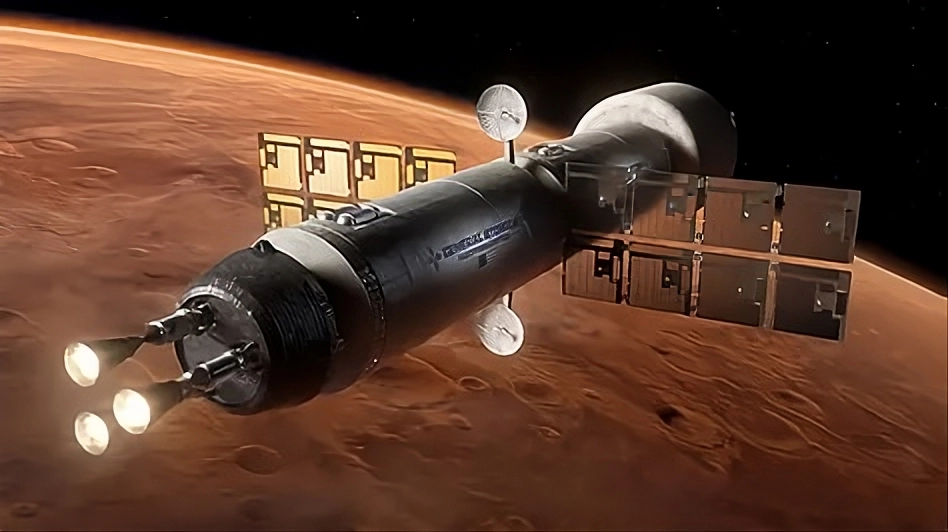
NASA Nuclear Reactor Projects Could Change Space Exploration Forever
For decades, humanity’s journey into space has relied on two familiar technologies: chemical rockets and solar panels. These systems have carried spacecraft across the Solar System, powered rovers on distant worlds, and enabled some of the most remarkable achievements in the history of exploration. Yet as ambitions grow beyond short-term missions and move toward permanent lunar bases and future expeditions to Mars, their limitations are becoming increasingly apparent. NASA now believes that the next major leap may come from a technology that has been used on Earth for generations: nuclear fission.
In a significant step toward the future of deep-space exploration, NASA and the United States Department of Energy (DOE) signed a new agreement on October 8, 2026, which will officially take effect on November 1. The partnership focuses on developing nuclear fuels, testing advanced space reactors, and integrating these systems into spacecraft designed for the next era of exploration.
The move reflects a growing understanding that future missions will demand far more energy than conventional systems can reliably provide. While chemical rockets remain essential for launching spacecraft from Earth, they require enormous amounts of propellant. Solar panels, meanwhile, become less effective as missions travel farther from the Sun. Even on the Moon, solar energy presents serious challenges because lunar nights can last approximately fourteen Earth days.
These constraints have pushed scientists and engineers to explore alternative energy sources capable of operating continuously in harsh and distant environments. The first major demonstration of this vision may arrive sooner than many expected. NASA is preparing Space Reactor-1 Freedom, a mission planned for 2028 that will send a spacecraft toward Mars using a nuclear fission reactor as its primary source of electrical power.
Unlike traditional spacecraft that depend on large quantities of chemical fuel, the reactor will generate electricity to drive Hall-effect ion thrusters. These engines produce thrust by accelerating charged particles and can operate continuously for long periods while consuming far less propellant than conventional rocket systems. Although this approach does not necessarily shorten the journey to Mars, it offers a dramatic increase in efficiency and mission flexibility. Continuous low-thrust propulsion could enable more ambitious missions, heavier scientific payloads, and extended exploration campaigns throughout the Solar System.
The Space Reactor-1 Freedom mission also carries another exciting objective. Onboard will be three small SkyFall helicopters, designed to explore Mars from the air. These aircraft represent the next chapter in a story that began with Ingenuity, the pioneering helicopter that arrived attached to NASA’s Perseverance rover and proved that powered flight was possible in the thin Martian atmosphere.
Mars has remained a central focus of scientific research in recent years. Discoveries such as ancient organic compounds continue to reshape our understanding of the planet’s history and its potential habitability. As explored in our article on Organic Molecules on Mars: The Molecules That Shouldn’t Be There, researchers have uncovered evidence suggesting that the Red Planet preserves complex chemical traces from its distant past.
At the same time, long-term robotic exploration has offered valuable lessons about surviving Mars’ unforgiving environment. The endurance of NASA’s Curiosity rover, despite extensive wear and damage accumulated over fourteen years of operation, demonstrates both the challenges and possibilities awaiting future technologies. Our analysis of Curiosity Rover Wheel Damage: What 14 Years on Mars Reveal About the Rover’s Survival highlights just how demanding Martian exploration can be.
While Mars captures much of the world’s attention, NASA’s nuclear ambitions extend much closer to home. The next major project is Lunar Reactor-1, a compact nuclear power system intended to provide reliable electricity for future human settlements on the Moon. NASA aims to have the reactor ready for launch by 2030.
Such a system could fundamentally change lunar exploration. Unlike solar arrays, a nuclear reactor could continuously generate power during the Moon’s long nights and within permanently shadowed regions where sunlight never reaches the surface. These areas are of particular scientific interest because they may contain significant deposits of water ice, a resource considered essential for long-term human presence.
Reliable nuclear energy could support habitats, scientific laboratories, communication systems, life-support infrastructure, and fleets of robotic vehicles operating across the lunar landscape. The broader implications extend far beyond the Moon and Mars. As spacecraft venture deeper into the Solar System, access to dependable energy becomes one of the most critical factors determining mission success. Nuclear reactors offer the possibility of powering instruments, propulsion systems, and future off-world settlements without depending entirely on sunlight.
For decades, nuclear technology has been considered one of the most promising solutions for deep-space exploration. What once seemed like a distant concept is now moving steadily toward reality. If NASA’s upcoming reactor missions succeed, they may mark the beginning of a new age of exploration, one in which humanity is no longer limited by the reach of solar energy. The road to permanent lunar bases, advanced Martian expeditions, and perhaps even journeys to the outer planets could ultimately be powered by the same force that has generated electricity on Earth for generations.
