
Hunter’s Moon 2026: How to See October’s Spectacular Full Moon
As darkness settles across the Northern Hemisphere, skywatchers are being treated to one of the most anticipated lunar events of the season. October’s full moon, widely known as the Hunter’s Moon, rises into the autumn sky, bringing with it a blend of natural beauty, ancient traditions, and fascinating astronomical phenomena.
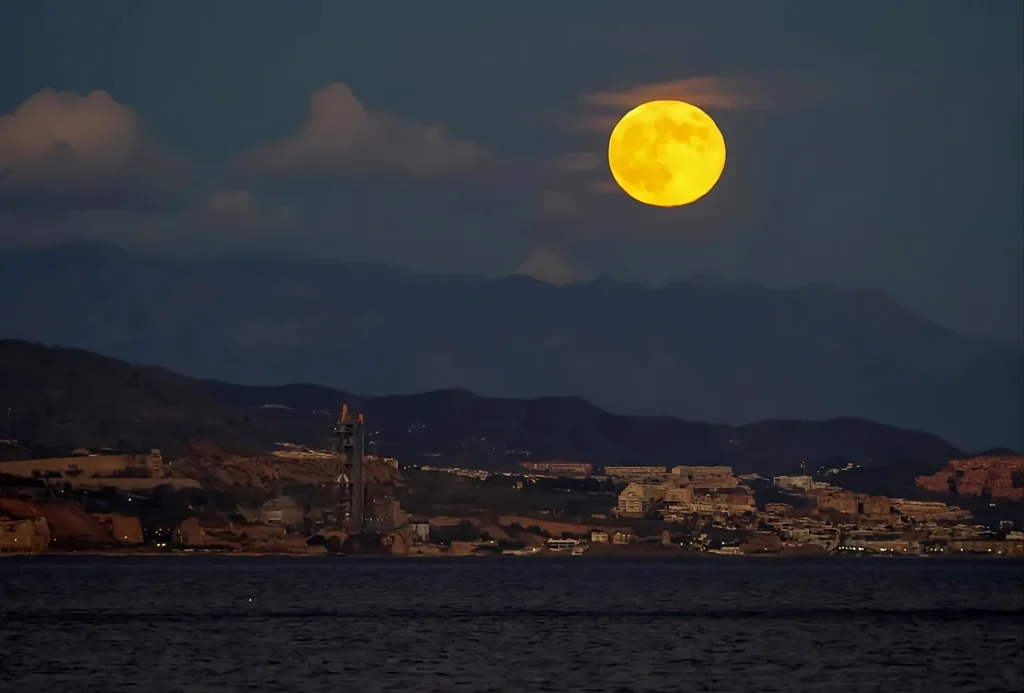
The Hunter’s Moon reaches its peak illumination during the night of October 25-26, appearing as a brilliant silver orb opposite the sun in Earth’s sky. While full moons occur every month, this particular lunar event has long held a special place in human history, marking a seasonal transition that is deeply rooted in agricultural and hunting traditions dating back centuries.
Unlike crescent or quarter moons, a full moon presents its entire Earth-facing hemisphere fully illuminated. During this phase, the dividing line known as the terminator, which separates the moon’s day and night regions, virtually disappears from view. This creates a bright and evenly lit lunar surface that reveals some of the moon’s most distinctive features.
Observers with binoculars or small telescopes can identify the vast dark plains known as maria, enormous basaltic regions formed billions of years ago when molten lava flooded giant impact basins. Bright streaks radiating from younger craters are also visible, evidence of ancient collisions that blasted material across the lunar landscape and left scars that remain visible today.
For many people, the most breathtaking moment occurs just after moonrise. As the Hunter’s Moon emerges above the horizon at sunset, it often appears unusually large and striking. This visual phenomenon is commonly known as the “Moon Illusion.” Although the moon itself is not physically larger, the human brain perceives it as bigger when it is positioned near trees, buildings, mountains, and other familiar objects along the horizon.
What Makes the Hunter’s Moon Special?
The name “Hunter’s Moon” originates from historical traditions in Europe and North America. Following September’s Harvest Moon, the bright October moon provided additional evening light that helped hunters track migrating animals and gather food before the arrival of winter. The prolonged illumination after sunset made outdoor activities easier at a time when preparation for the colder months was essential for survival.
Over time, the Hunter’s Moon became embedded in folklore, seasonal celebrations, and cultural traditions. Even today, its appearance serves as a reminder of humanity’s enduring relationship with the rhythms of nature and the night sky.
Astronomers encourage observers to find an open eastern horizon shortly after sunset for the best viewing experience. The moon’s golden and orange hues near the horizon are caused by Earth’s atmosphere, which scatters shorter wavelengths of light and allows warmer colors to dominate the lunar appearance. As the moon climbs higher, it gradually shifts back to its familiar silvery-white color.
The 2026 Hunter’s Moon offers more than just a beautiful night-time spectacle. It provides an opportunity to connect with centuries of human history, explore the geological story written across the lunar surface, and appreciate the remarkable ways in which our minds perceive the sky above us.
Whether viewed through a telescope or simply admired with the naked eye, October’s Hunter’s Moon remains one of the year’s most captivating celestial events, transforming an ordinary autumn evening into a memorable encounter with the wonders of space.
Source: Adapted from reporting by Anthony Wood for Space.com.
Related Astronomy Articles
If you enjoy observing remarkable celestial events, you may also be interested in learning more about the Total Solar Eclipse August 12 2026, one of the most spectacular astronomical phenomena visible across Europe and beyond.
For another fascinating story about recent space discoveries, explore Elias 2-24 b: The Astonishing Youngest Planet Ever Discovered, a breakthrough that is helping scientists better understand how planets form around young stars.
