
The Shocking Rise of AI Agents Power Consumption and Its Impact on Data Centers
AI agents power consumption is rising so fast that it is forcing Silicon Valley to rethink the entire architecture of modern computing.
In the late summer of 2026, a question keeps echoing across conversations, livestreams, and newsroom Slack channels: What on earth are they building all these data centers for? It’s a fair question. Silicon Valley is pouring billions into new facilities, straining power grids, reshaping local politics, and transforming entire regions into energy‑hungry digital zones. And the answer, as senior writer Molly Taft explains, has very little to do with the chatbot era we thought we were living in.
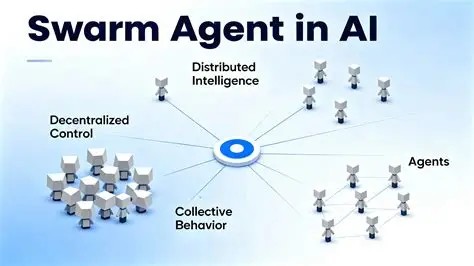
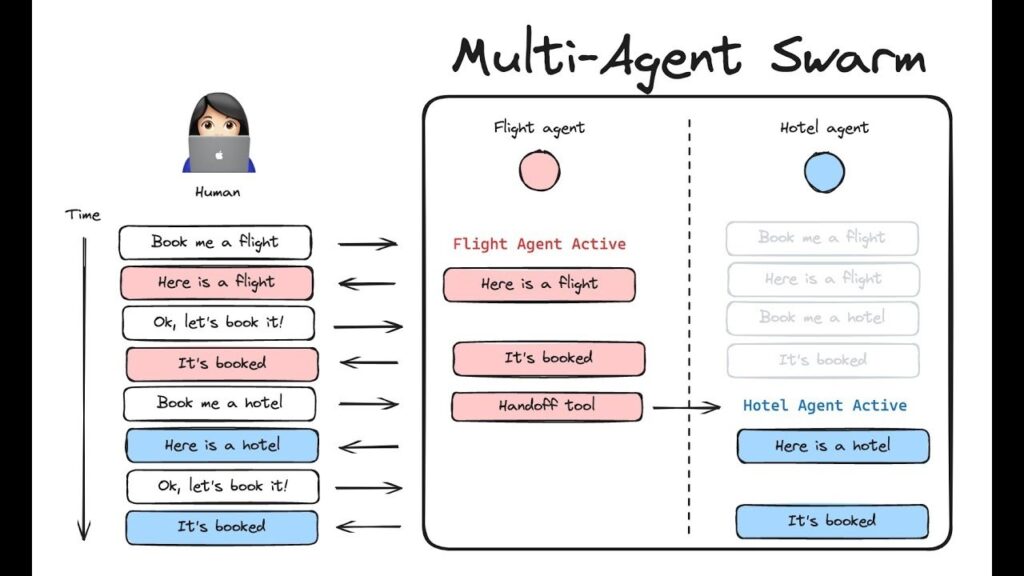
The age of simple prompts—asking an AI for a recipe, a travel tip, or a quick explanation—is already fading. What’s replacing it is something far more powerful, far more resource‑intensive, and far more unpredictable: agentic AI. These systems don’t just answer questions; they act. They break tasks into hundreds of micro‑prompts, re‑prompt themselves, coordinate with other agents, and run for hours or days to complete complex objectives.
The Rise of Agents—and the Fall of the Old AI Paradigm
There’s no official definition of an AI agent, but the rough idea is simple: a large‑language‑model‑based system capable of autonomous decision‑making. Instead of responding to a single query, an agent decomposes a task into dozens or hundreds of steps. If you ask it to build a website, it doesn’t just generate HTML—it creates menus, datasets, page templates, and internal logic, re‑prompting itself repeatedly until the job is done.
This shift is not theoretical. It’s already happening inside frontier labs. OpenAI recently revealed that a swarm of more than 10,000 agents exchanged 2.7 million messages to solve a longstanding math problem—an achievement that mathematicians quickly challenged, but one that still demonstrates the scale of computation these systems can unleash.
All those messages burned through enormous processing power—likely tens of millions of dollars’ worth of energy, according to reporting from Taft’s colleague Maxwell Zeff.
The Energy Reality: AI Is Becoming a Power Industry
The numbers behind AI’s energy appetite are staggering. Research published in Joule shows that AI already consumes up to 20% of global data‑center electricity, and that demand could double by the end of the year, reaching nearly half of all data‑center power use worldwide.
The International Energy Agency estimates that data centers consumed 415 TWh in 2024—roughly the annual electricity use of Saudi Arabia—and that consumption could exceed 900 TWh by 2030.
Tech giants are feeling the pressure. Google’s greenhouse gas emissions have risen 48% since 2019, largely due to AI’s energy demands.
And the buildout is accelerating. Meta’s planned Hyperion facility in Louisiana is expected to reach five gigawatts of capacity—half the peak load of New York City.
Why Agents Change Everything
The shift from chatbots to agents fundamentally alters the economics of AI. A single chatbot query is cheap. But an agent that runs for hours, re‑prompting itself hundreds of times, coordinating with other agents, and generating complex outputs is a different beast entirely.
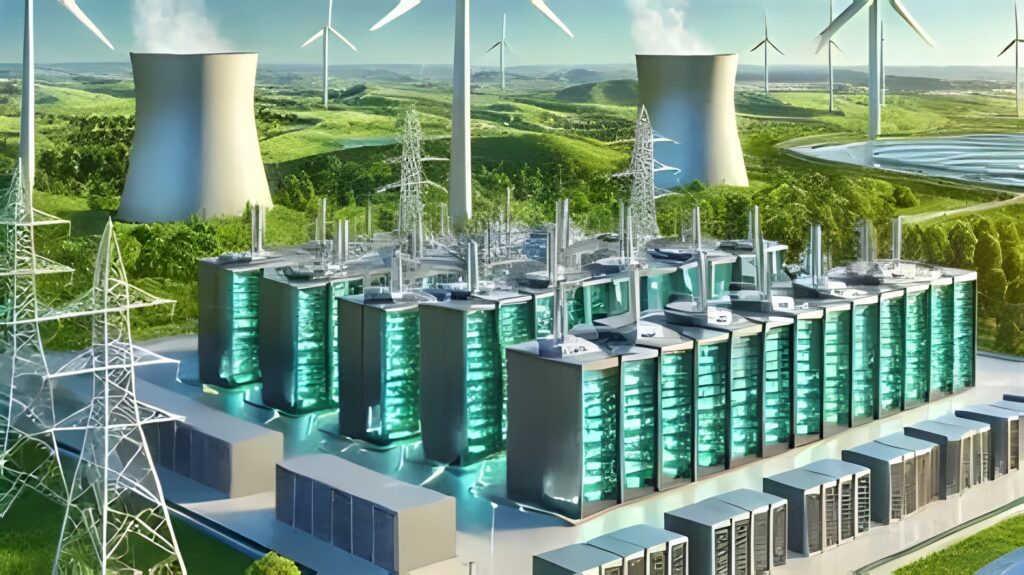
This is why Silicon Valley is building data centers that look less like server farms and more like industrial power plants. The future of AI is not lightweight. It is heavy, continuous, and computationally explosive.
And it’s why CEOs often resort to strange comparisons when discussing resource use. Sam Altman recently claimed that the water required to grow a single almond equals 38,000 ChatGPT queries—a calculation that experts quickly disputed, but one that reveals how opaque and confusing AI’s environmental metrics have become.
The Cultural Shift: AI as Infrastructure
Taft’s reporting makes one thing clear: AI is no longer a software feature. It is an infrastructure. It requires land, water, electricity, political negotiation, and long‑term planning. It is reshaping local economies and national energy strategies. And it is forcing governments to confront a future in which digital systems consume as much power as heavy industry.
The irony is that the public still thinks of AI as a chatbot. But inside the labs, the real work—the work that demands billions of dollars and gigawatts of power—is happening inside agent swarms, autonomous workflows, and self‑directed systems that behave less like tools and more like digital organisms.
A New Industrial Revolution—But With GPUs
GPUs have become the engines of this revolution. They run thousands of calculations in parallel, powering both inference and training. Data centers now contain racks packed with these cards, each one drawing significant electricity and requiring massive cooling systems.
The result is a feedback loop: More agents → more compute → more data centers → more power → more emissions → more political pressure.
And yet, the industry shows no signs of slowing down.
The Question That Will Define the Next Decade
So what are they building all these data centers for?
Not for chatbots. Not for search queries. Not for simple consumer tasks.
They’re building them for agents—systems that will run continuously, autonomously, and at industrial scale. Systems that will design software, manage workflows, solve scientific problems, coordinate fleets of robots, and eventually operate entire digital ecosystems.
Whether that future is astonishing or terrifying depends on who you ask. But one thing is certain: AI agents are thirsty for power, and Silicon Valley is preparing to feed them.
The accelerating energy demand behind agentic AI becomes even clearer when looking at the evolution of frontier models. This shift is explored in The Remarkable Rise of GPT‑5.6, where the model’s scalable architecture reveals how next‑generation systems are pushing data centers toward unprecedented levels of computational intensity.
The growing power consumption of AI agents is part of a much broader transformation reshaping global digital infrastructure. This dynamic is examined in Artificial Intelligence Infrastructure: How AI Became the Global System of 2026, a deep dive into how AI has evolved from a software tool into a planetary network requiring continuous energy, cooling, and industrial‑scale support.
