Digital Embodiment: When Technology Starts Feeling Like Part of Us
By Elen Hartley — Zemeghub Edition
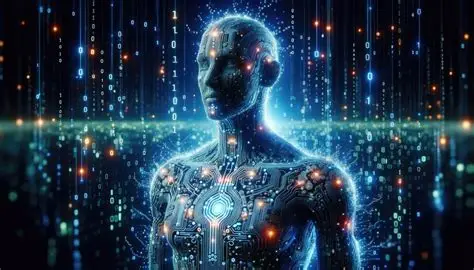
Digital embodiment is becoming one of the most profound shifts of the modern era, a quiet transformation in which technology stops feeling like an external tool and begins to blend into the way we think, move and make sense of the world. There is a moment — subtle, almost invisible — when a device stops being an object and starts becoming part of us
There is a moment — subtle, almost invisible — when technology stops feeling like an object and begins to feel like an extension of ourselves. At first, a new device is just a thing. You notice its weight, its buttons, its screen. You think about how to hold it, how to use it, how it fits into your routine. But then something shifts. You reach for it before deciding to. You check a message while walking across the room. You ask an AI a question before you’ve even finished forming the thought. And slowly, the device fades from awareness. It doesn’t vanish physically. It simply becomes woven into the way you move through the world.
Digital Embodiment and the Moment Technology Stops Feeling Like a Tool
That quiet disappearance may be one of the most profound transformations technology has brought into human life. We often describe progress through the capabilities of machines — faster processors, sharper cameras, more advanced AI, smaller sensors, more precise algorithms. Yet another kind of progress receives far less attention: the way technology becomes less visible, less separate, less external.
A smartwatch no longer requires you to sit at a desk. A voice assistant doesn’t need a keyboard. An AI system can answer a question before you open a browser. A health sensor can monitor your body without asking for permission. The machine begins to adapt to the rhythm of the person, and once that happens, the relationship changes.
In the United States, this shift is already measurable. A Pew Research Center survey from February 2026 found that 37% of adults own a smartwatch, 35% have an AI‑enabled smart speaker, and 18% use an AI‑enabled smart doorbell. These are not futuristic prototypes. They are ordinary objects inside ordinary homes. What matters is not just how many people have them — but how quickly they become invisible.
A smartwatch starts as a step counter. Then it becomes a messenger. Then a sleep monitor. Then a reminder to stand. Eventually, you glance at it without thinking of it as a computer. It becomes a small extension of your awareness. You don’t decide to use it. You simply live with it.
Digital Embodiment in AI Assistants and the Thinking Process
Artificial intelligence is moving along the same path, only faster. Pew’s 2026 research shows that 96% of American adults have heard at least a little about AI, and nearly half say they’ve heard a lot. Chatbots are now the technology most commonly associated with artificial intelligence. But the more revealing numbers describe what people actually do with them: 42% use chatbots to search for information, 38% of employed adults use them for work tasks, 20% for medical advice, 20% for diet or fitness guidance, and 10% for emotional support.
That last number is easy to overlook — and impossible to ignore. Asking a machine to summarize an article is one thing. Asking it what to do when you feel lost is something else entirely. The first is a tool. The second begins to resemble a relationship.
Technology has always extended human ability — glasses extend sight, cars extend mobility, calculators extend arithmetic, cameras extend memory. But artificial intelligence extends something deeper: the way we think. We ask it to organize information, write messages, compare choices, explain difficult subjects, plan trips, generate ideas, and sometimes simply listen. The machine is no longer outside the thinking process. It is inside it. And once that happens, the question is no longer whether we use technology — but how much of ourselves we are willing to place inside it.
This tension is not limited to people who fear technology. Pew found in 2025 that six in ten Americans wanted more control over how AI is used in their lives, yet nearly three‑quarters were willing to let AI assist with at least some daily activities. The contradiction is deeply human: we want help, but we don’t want to lose control of the relationship.
We want machines that understand us — but not too well. We want personalization — but not surveillance. We want AI to remember our habits — but we worry about where that memory lives. We want convenience — but we also want privacy. We want assistance — but we want independence. We want technology to fade into the background — but we don’t want to forget that it’s there.
Perhaps that is why a new generation of devices is becoming quieter. Some wearables now collect information silently, without demanding attention. They let users review data later, instead of interrupting them constantly. It’s a simple idea: technology can remain useful without insisting on being noticed. A tool does not need to speak to be valuable. Sometimes the best technology is the one you forget you’re wearing.
But invisibility has consequences. When technology becomes part of our routine, its influence becomes part of our routine too. A notification changes what you think about. A recommendation changes what you buy. A navigation system changes how you remember places. An AI assistant changes how you approach a blank page. A fitness tracker changes how you interpret your own body. None of these shifts feels dramatic — and that is precisely why they matter. Human behavior rarely changes through grand decisions. It changes through tiny adjustments repeated hundreds of times.
Memory is a perfect example. For most of human history, forgetting was natural. You forgot numbers, names, conversations, places. Now devices remember for us — photographs record where we were, calendars tell us where we need to be, search engines recall what we once wanted to know, cloud storage preserves documents we would have lost. AI systems can organize information around us and return it when needed. The advantage is obvious. But something else happens: we begin to outsource parts of memory. Humans have always used external memory — writing, libraries, computers — but the danger is not that technology helps us remember. The danger is that we may stop knowing what we need to remember ourselves.
Decision‑making follows the same pattern. Asking a machine which option is best is seductive. It doesn’t get tired. It can compare hundreds of possibilities. It remembers details. It doesn’t have bad days. But human decisions are not optimization problems. Sometimes you choose something because you care about it. Sometimes the irrational option is the meaningful one. Sometimes the point of choosing is not the outcome — but the act of becoming the person who made the choice.
This distinction will matter even more as AI agents become capable of observing context, remembering interactions, anticipating needs, and taking actions on our behalf. The idea is powerful — and unsettling. Imagine an AI that knows your schedule, your habits, your spending patterns, your health data, your conversations, your relationships. It could become incredibly useful. It could also become incredibly intimate. At some point, the system might know things about you that even your closest friends do not — not because it understands you, but because it has watched you.
Data can create a portrait without creating understanding. A machine might know you walk at 7 p.m. It does not know why. It might know you stopped replying to someone. It does not know what happened. It might know your sleep was worse last Tuesday. It does not know you spent the night worrying about your father. The danger is not that machines will become too human — but that humans will begin treating machines as though they are.
And then there is the frontier where software meets the body. Brain‑computer interfaces are moving from science fiction toward early clinical reality. Researchers are developing systems that translate neural activity into computer commands, helping people with severe neurological disabilities communicate or interact with the world. The field is experimental, technically difficult, ethically complex — but the direction is unmistakable.
The future will not arrive through sudden implants. It will arrive quietly. A sensor here. A wearable there. An AI assistant that remembers. A device that anticipates. A system that interprets. One small layer after another, until the question “Where does the technology end?” becomes harder to answer. Maybe it ends at the screen. Maybe at the skin. Maybe one day somewhere inside the nervous system.
But perhaps the boundary is not physical. Technology becomes part of us not when it enters the body, but when we rely on it to perform functions that once felt inseparable from being human — remembering, navigating, writing, choosing, communicating, paying attention, making sense of the world. That transformation is already underway, and nothing suggests it will stop.
The challenge is not to reject it — that would be unrealistic and undesirable. Technology has improved medicine, accessibility, communication, and countless moments of daily life. The challenge is to remain conscious of the relationship. To notice when a tool becomes a habit. To notice when assistance becomes dependence. To notice when personalization becomes surveillance. To notice when convenience becomes control.
Because the most powerful technologies may not be the ones that announce themselves as revolutionary. They may be the ones that become so ordinary that we stop asking what they are doing to us. A phone once felt like a machine. Now it feels like part of daily life. AI is following the same path. And the next generation of technology may go even further — becoming something woven into how we perceive, remember, and decide.
Perhaps that is when technology truly becomes part of us. Not when the machine enters the body — but when, without it, we begin to feel slightly less like ourselves.
The way technology blends into our thoughts and daily routines echoes a deeper transformation in how we perceive the world itself. This shift is explored in Digital Perception of Reality: The Powerful Truth Behind How Social Networks Rewrite Our World, a piece that reveals how digital environments reshape emotions, attention and the very structure of human experience.
The fusion between humans and intelligent systems is part of a broader evolution described in Digital Human Evolution: How the Algorithm Is Rewriting Modern Society. It shows how algorithms, data flows and digital interfaces are quietly redefining identity, behavior and the boundaries of human autonomy.
The quiet transformation of human behavior in the digital era mirrors the subtle shifts happening in our physical world. A deeper look at Earth’s geomagnetic activity in Earth’s Magnetic Field Changes 2026: The Invisible Pulse Transforming Our Planet reveals how unseen forces can reshape environments just as invisible technologies reshape our minds.
The way technology becomes part of us reflects a broader truth: digital systems are no longer separate from the world we inhabit. The discovery described in Space Debris Metal Spheres: The Astonishing Discovery on Australian Beaches shows how the digital age leaves physical traces across the planet, reminding us that technological evolution affects both human behavior and the environment.
